Experiment
Mysterious forces
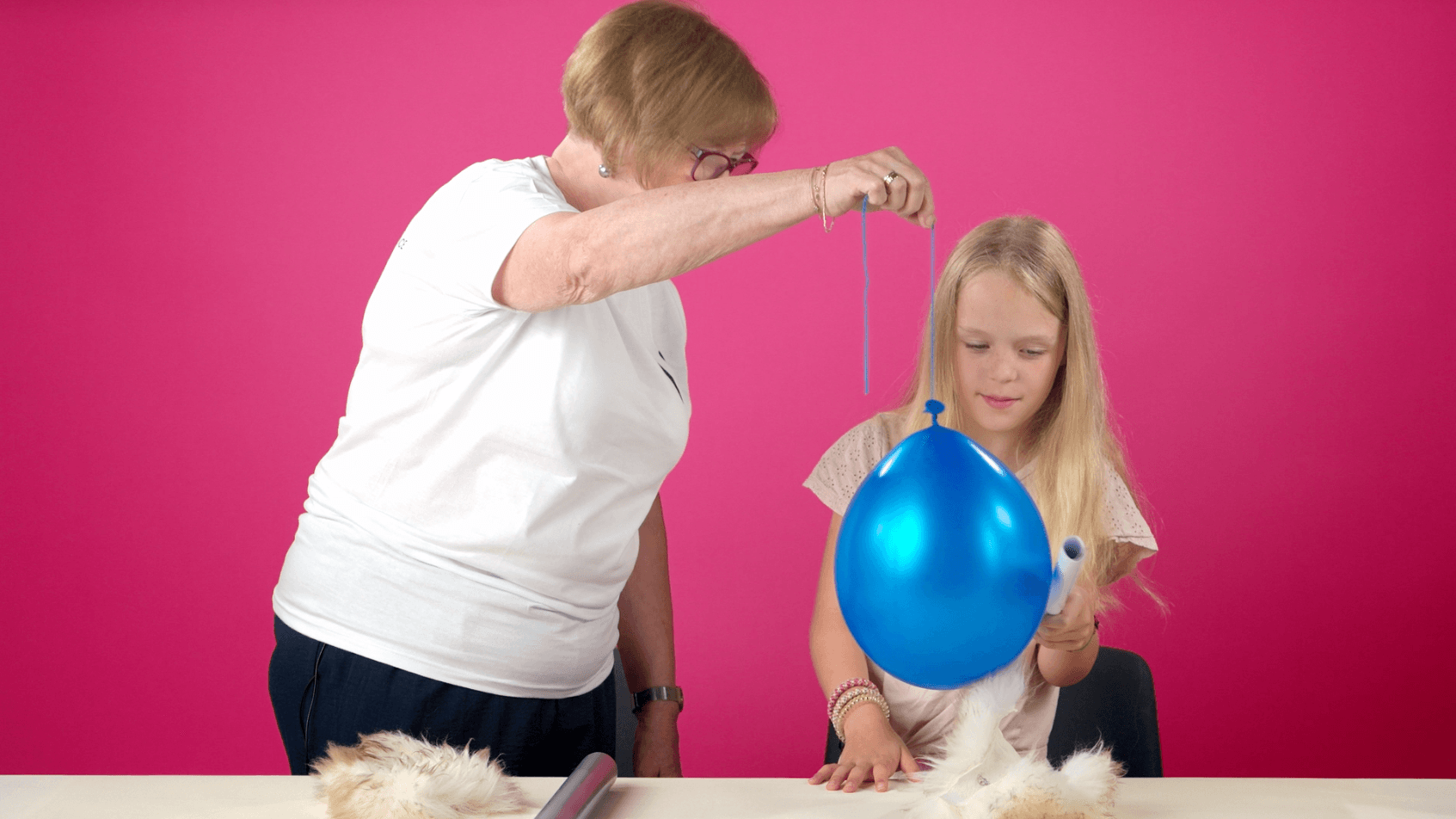
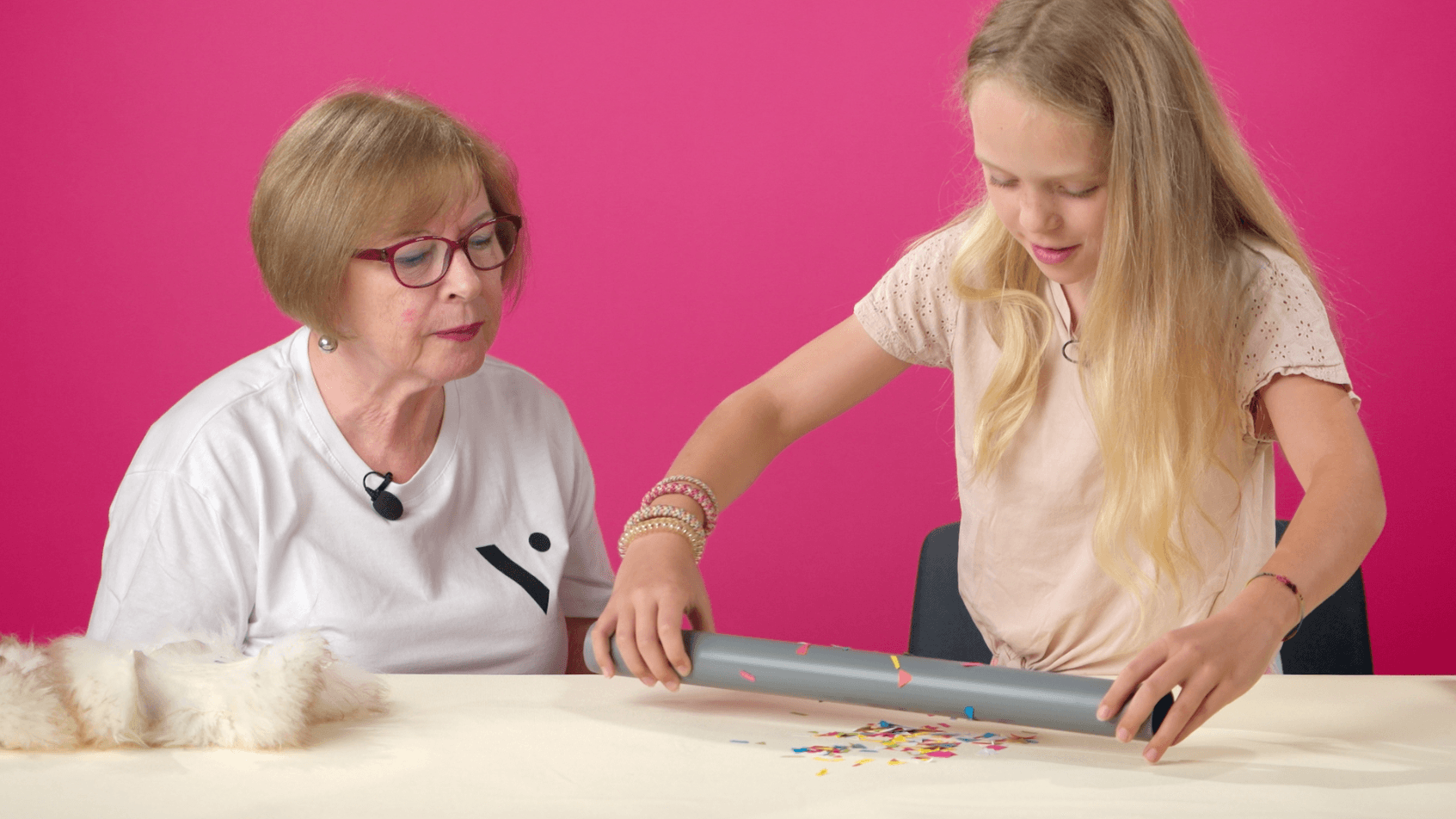
Have you ever wondered why your hair sometimes stands on end when you comb it, or why a balloon sticks to a wall? These are examples of a physical phenomenon called electrostatics! In this experiment, we will explore how electrically charged objects affect each other, and whether invisible forces can move different objects.
How does it work?
Objects consist of positive and negative particles. When objects are rubbed together, some of them release negative particles (electrons), these objects are then positively charged. Some objects readily absorb negative particles. After charging, such an object becomes negatively charged. This charge transfer generates a force that we will explore in the following experiments.
Exciting fact
Lightning is the result of a large electrical discharge. However, the exact process is still being researched, including at ISTA. The Waitukaitis research group generates miniature lightning bolts in an experimental physics laboratory to study the process of lightning discharge in detail.
Make your pictures float
You will need:
Paper
A balloon with a string tied to it.
PVC pipe
Sheep’s wool, a wool jumper or a woolly hat
Small pieces of paper
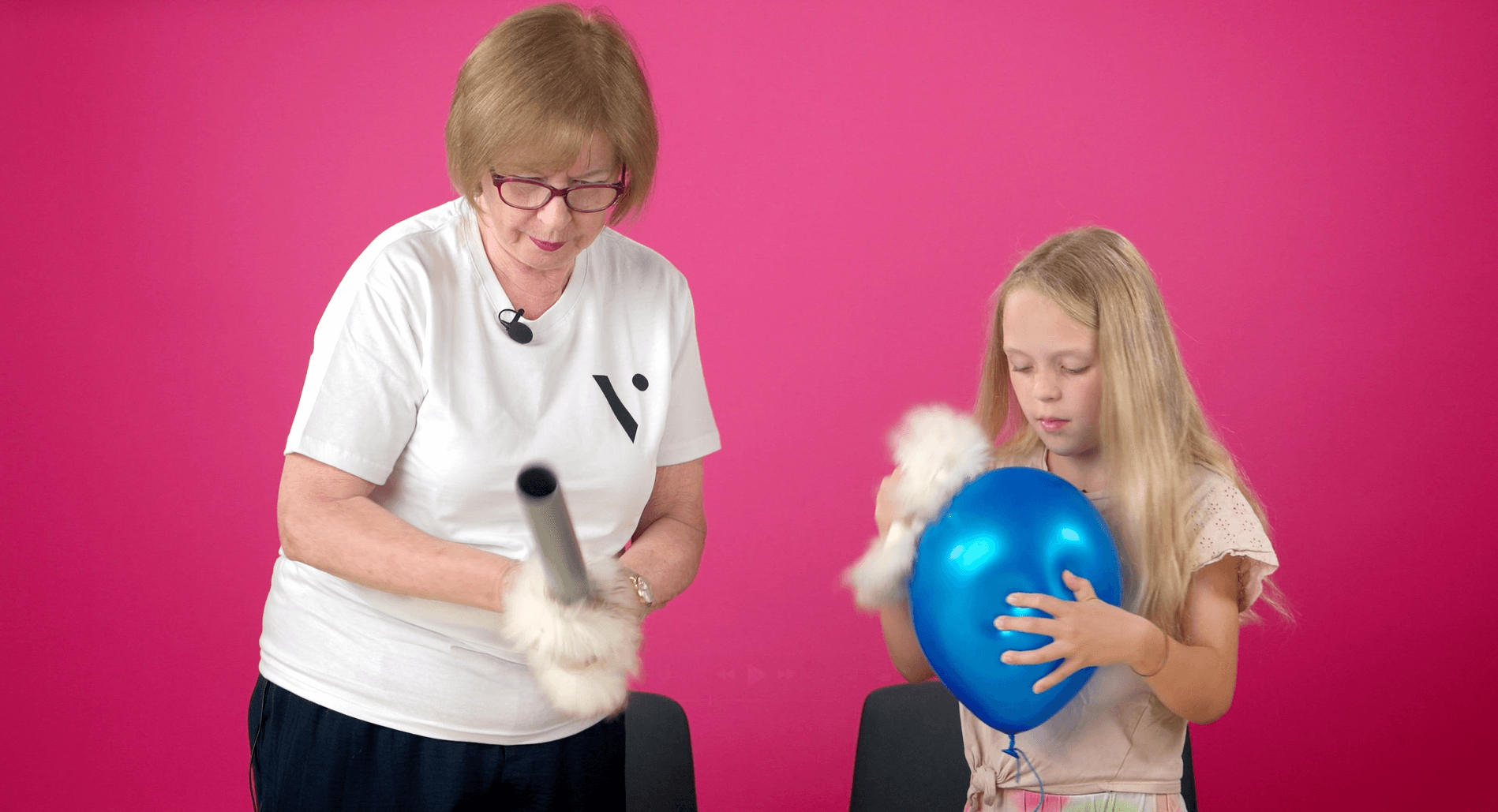
Step 1
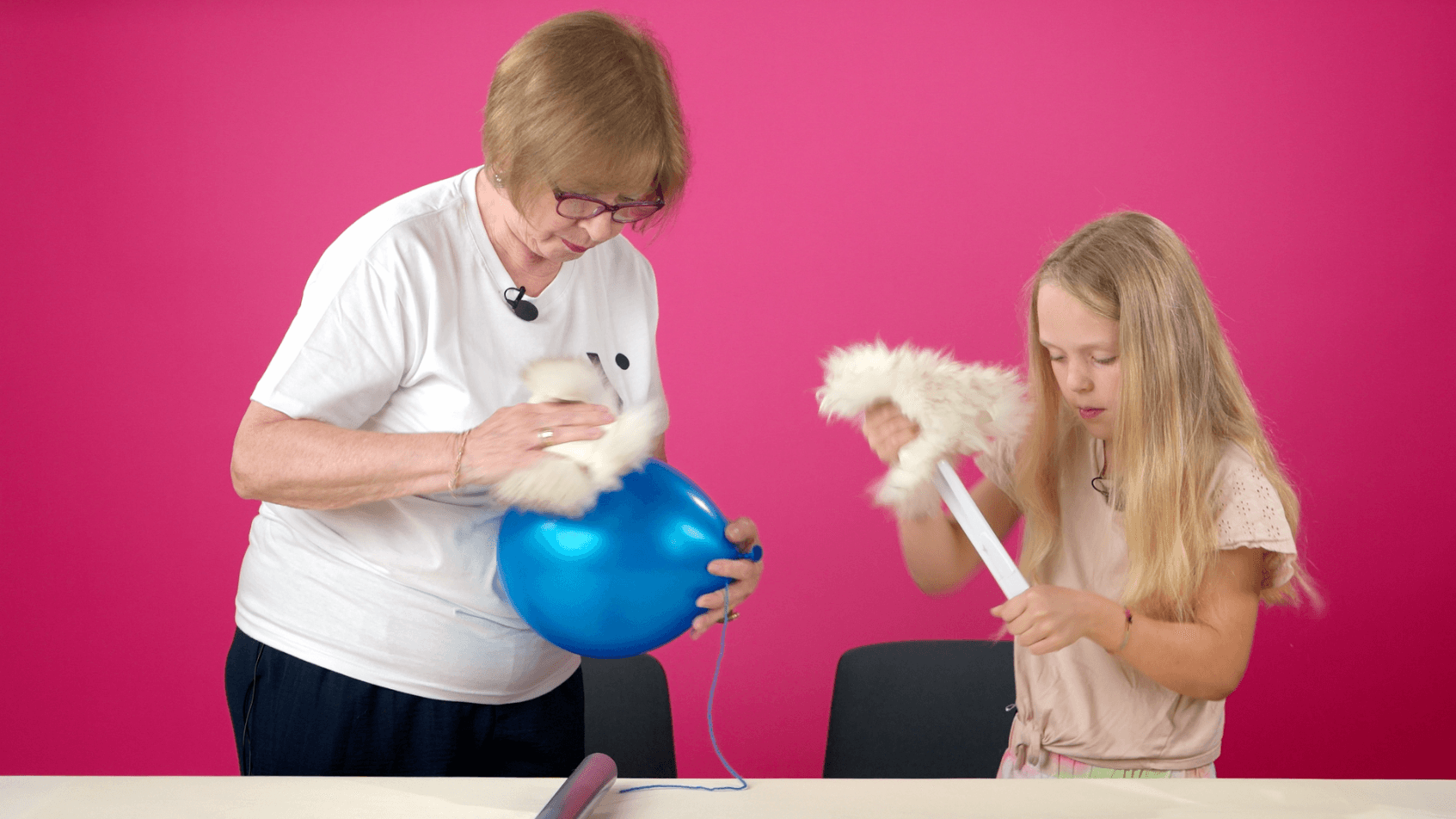
Rub the PVC pipe and the balloon on the wool.
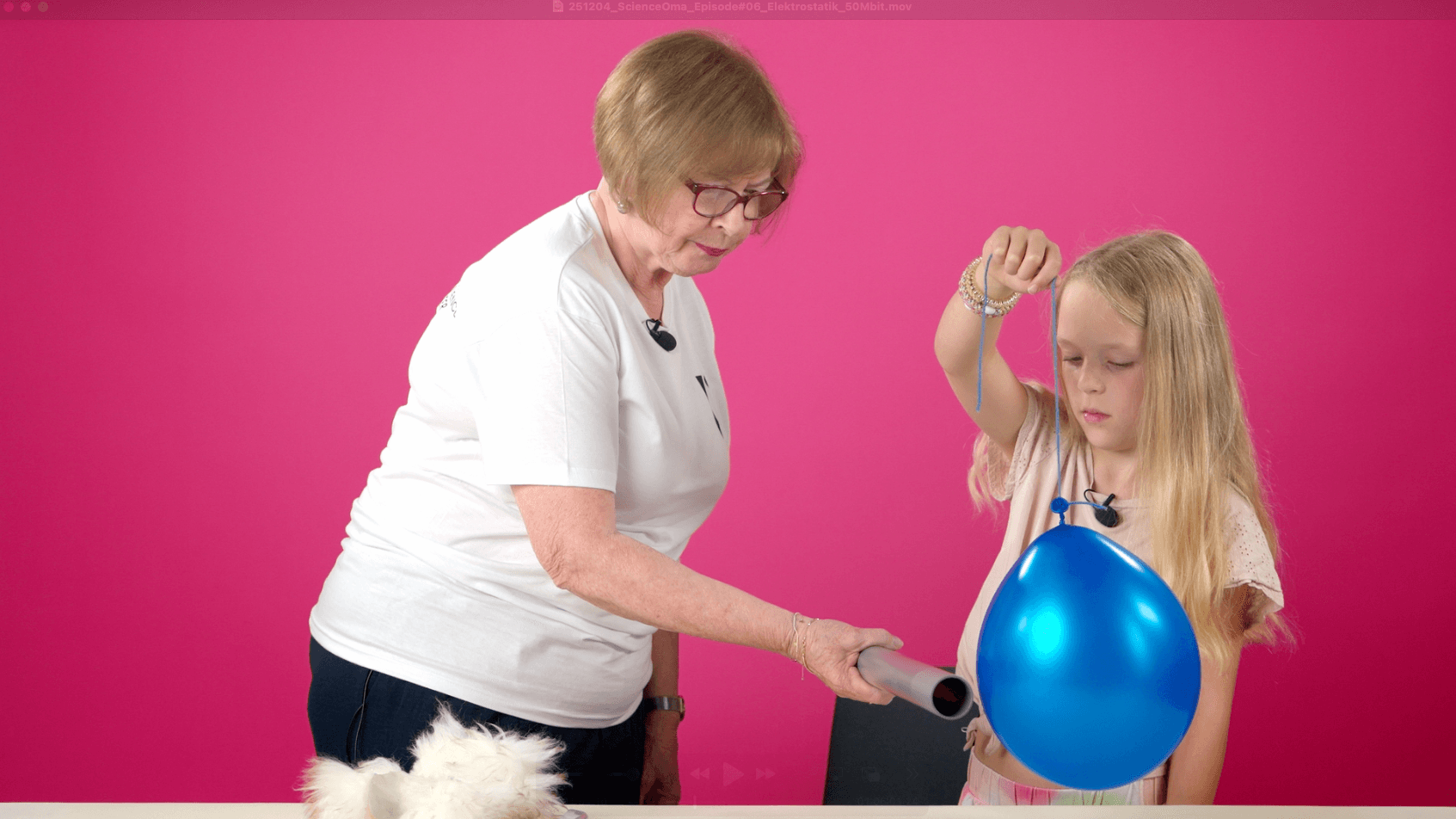
Step 2
Bring the PVC pipe towards the balloon and observe what happens.
Step 3
Roll up the paper. Rub the paper roll and the balloon against the wool.
Continue your research!
What would happen if you filled a spray bottle with water, sprayed it in the air three times and repeated the experiment? Does this increase or decrease the force?
Use other materials and explore how different materials react to static electricity.
Background knowledge
Friction causes a transfer of charge, leading to an excess of either positive or negative particles. Once objects are charged by friction, they can exert force, as can be observed in the experiments. Objects with different charges attract each other. Objects with the same charge repel each other.
How does the water in the air affect the electrical force? If the environment is humid, i.e., if the air contains small water droplets, the charge becomes distributed in the air. These water droplets contain tiny charged particles (ions) that are responsible for this. Consequently, an electrostatically charged object discharges in the air and no longer exerts any force on other materials.