Experiment
Grow your own sparkling crystals
Crystals look like little treasures — sparkling and beautifully shaped. You can think of gemstones or snowflakes. In this experiment, you can grow your own crystal using very simple materials. You'll see that sometimes science just takes a little time — and curiosity, of course!
How does it work?
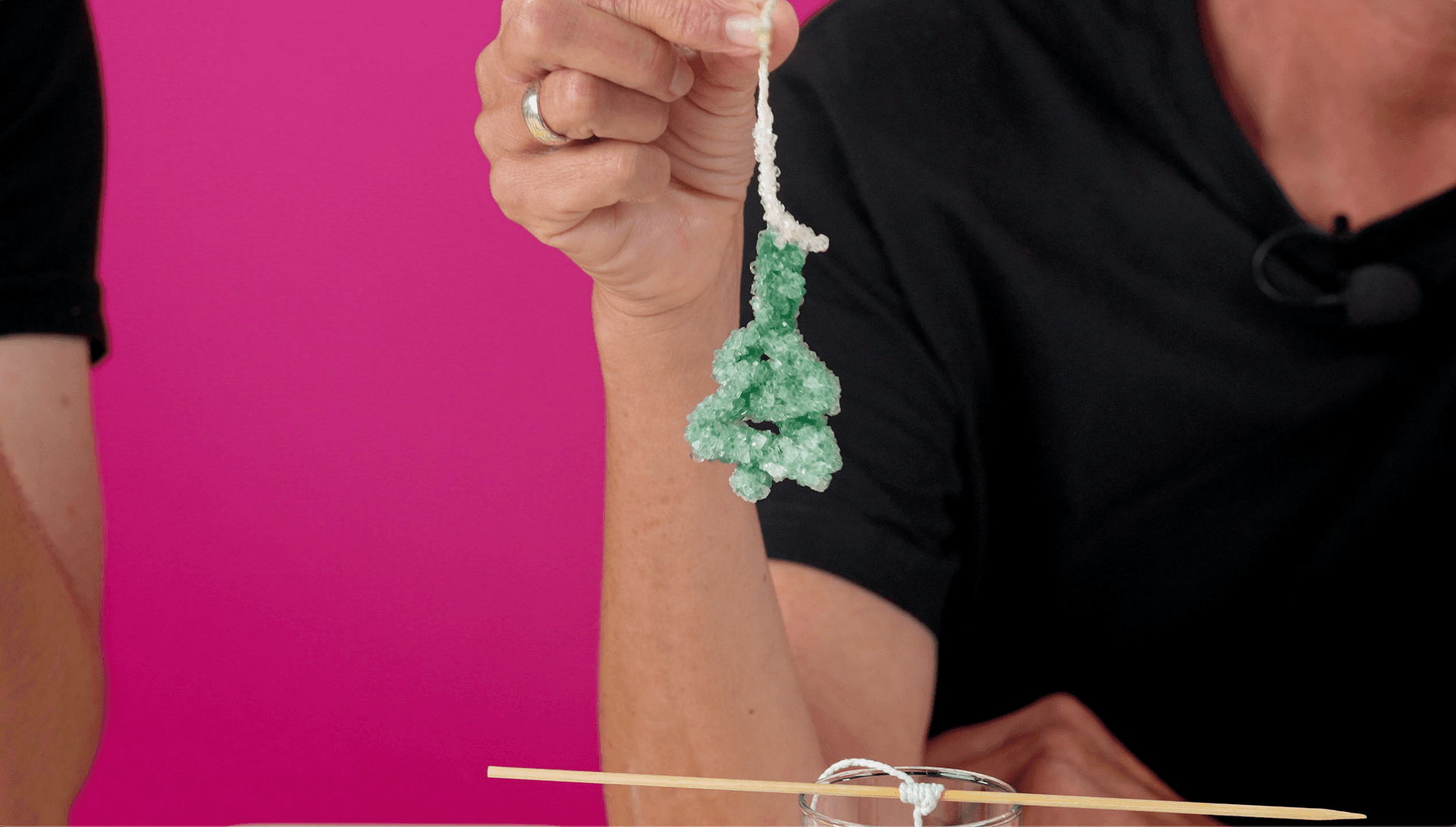
Crystals form when solid substances dissolve in a liquid and then arrange themselves in very regular shapes. In our case, the solid substance is alum, a salt that you can buy in pharmacies or online. When you add alum to hot water, it dissolves. As the water cools, the water can no longer hold as much salt, so the salt "grows", forming sparkling crystals! These grow particularly well on rough surfaces, such as a pipe cleaner.
Safety note
You will need alum powder for the experiment. Be sure to avoid getting the alum in your eyes or swallowing it. It is harmless to the skin and can simply be washed off.
Let’s start!
You will need:
1 pipe cleaner (e.g. green or red)
1 piece of string
1 pencil or wooden stick
A transparent drinking glass or jam jar
Approx. 150 g of alum powder (potassium aluminum sulfate, available from pharmacies)
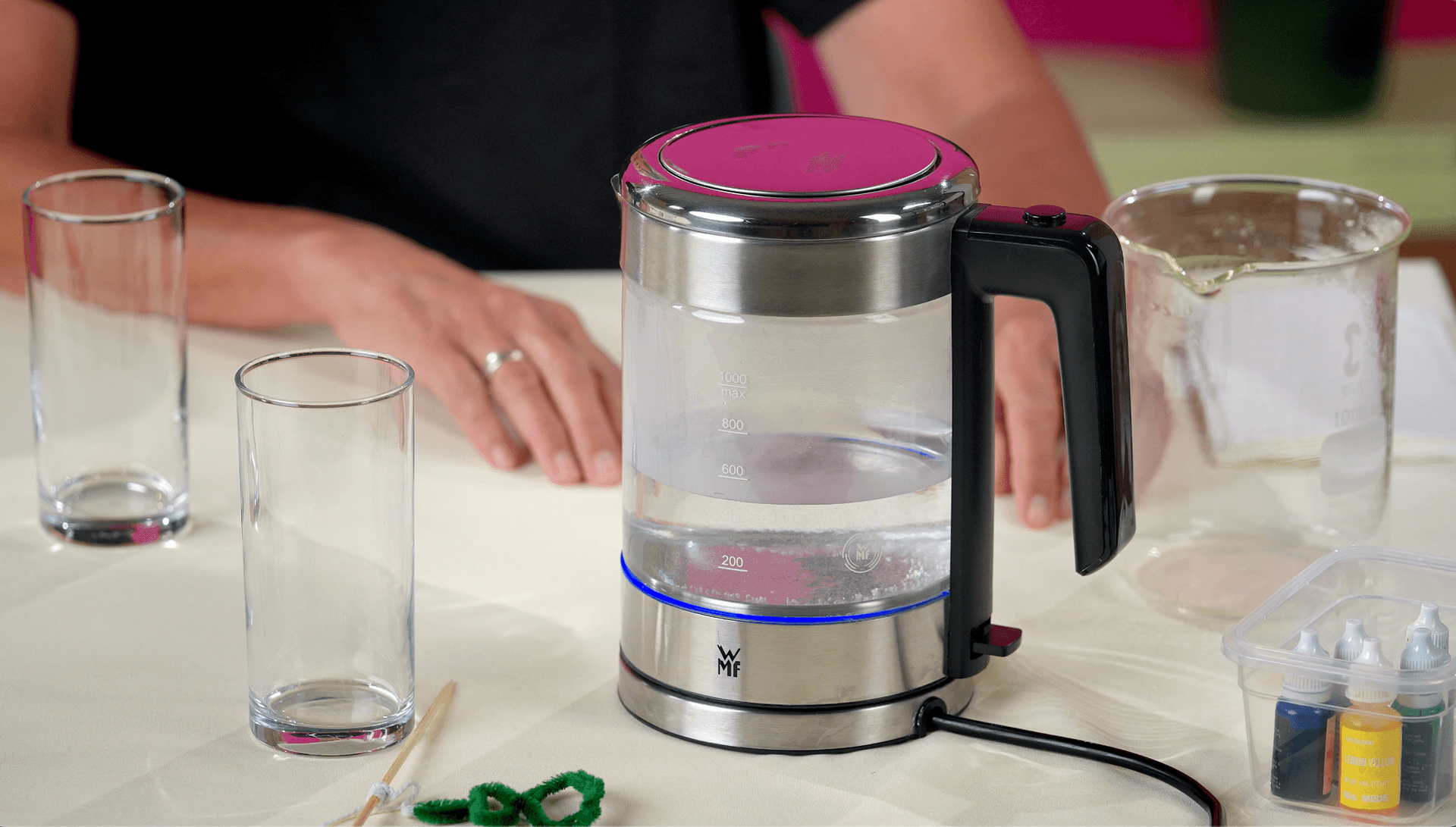
Approx. 250 ml of hot water (caution! It is best to heat and pour the water with an adult).
Spoon for stirring
Scissors
Step 1
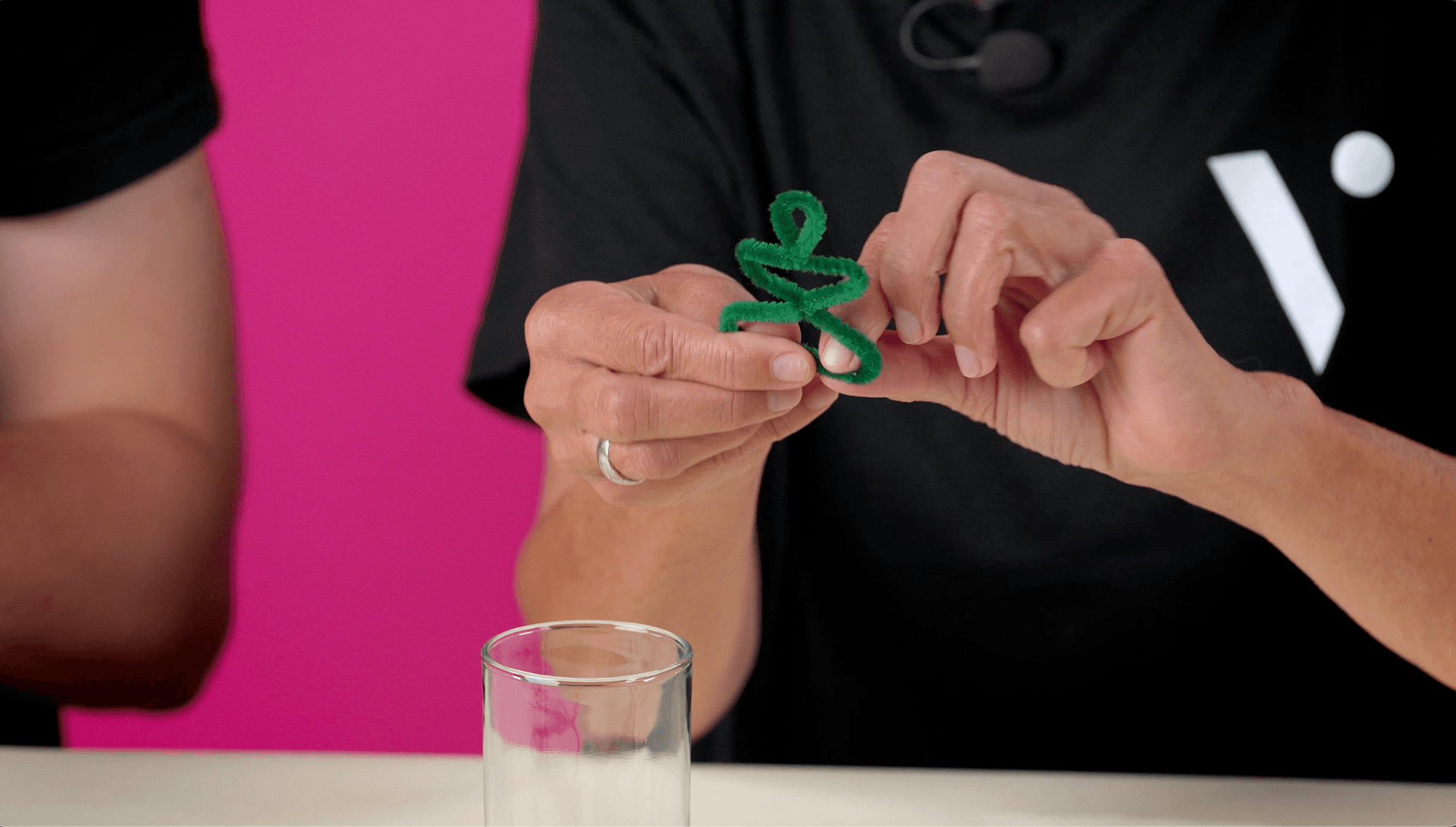
Bend the pipe cleaner into the desired shape. You could make a heart or a Christmas tree, for example. If necessary, use scissors to cut the pipe cleaner to size.
Step 2
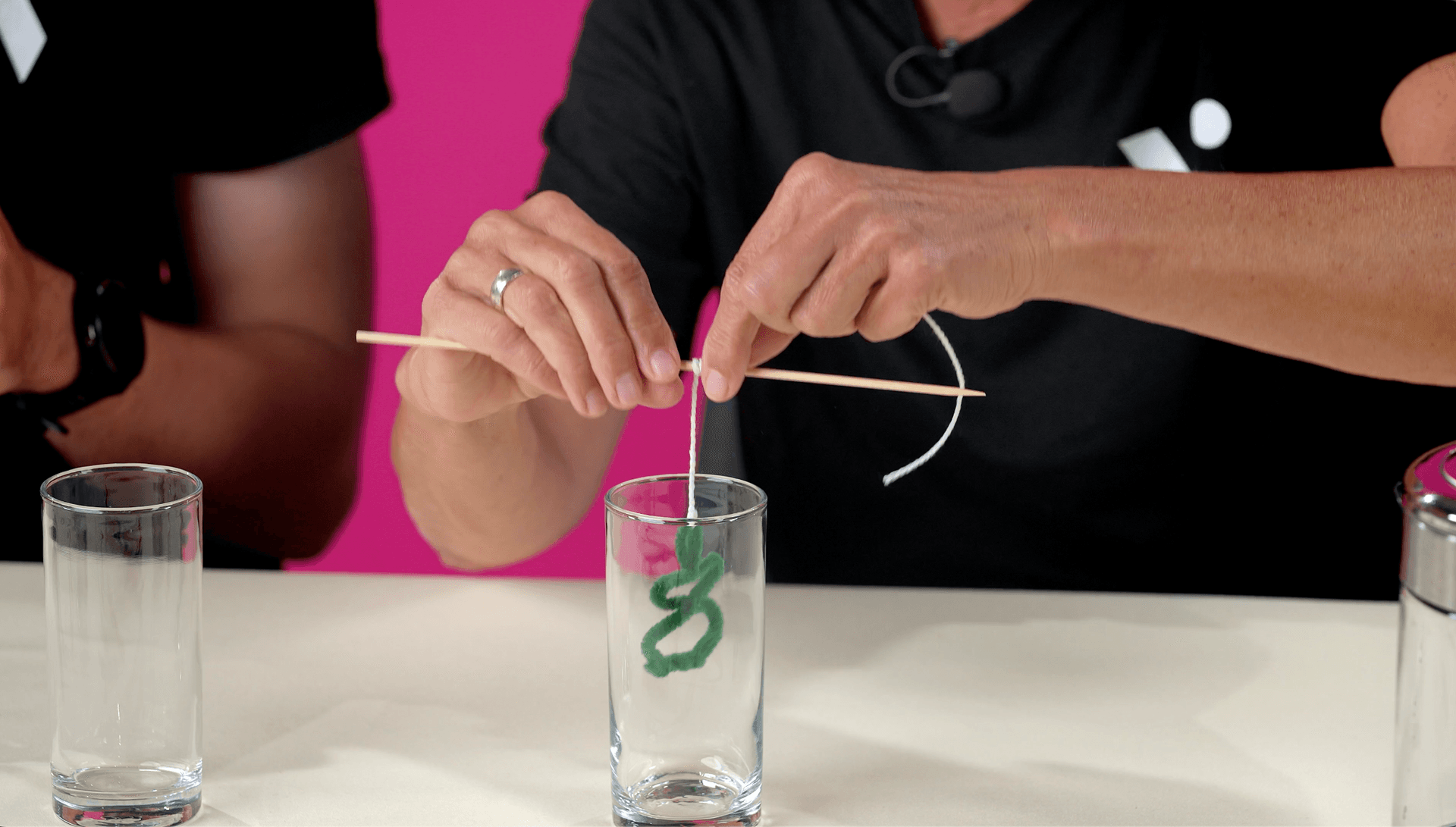
Attach it to a pen or pencil with a string. It should then be able to hang freely inside the glass without touching the bottom or sides.
Keep exploring!
Try other shapes, such as a star or a cloud.
What happens if you use more or less alum?
How do the crystals differ when you use differently-coloured pipe cleaners?
Background knowledge
Crystals can be found everywhere in nature, for example in salt, sugar, ice and gemstones such as quartz and diamonds. They form when atoms arrange themselves in very specific patterns. Large crystals take time to form, just like the ones in your glass!
By researching crystals, scientists can discover new materials that have never existed before!
The Ibáñez Group at ISTA is researching how new materials can be created through the formation of tiny crystals that are too small to be seen with the naked eye. This newly produced material can generate energy and heat, and is known as a thermoelectric material. This type of material could be used in portable cooling devices, such as small camping fridges, or for temperature control in factory machinery.