Experiment
Floating ink
Have you ever seen how some animals can walk on the surface of puddles without sinking? Or how water forms round beads on the leaves of some plants without making the leaf wet? These special properties of liquids help us in many experiments—even in making drawings float and dance!
How does it work?
For our experiment, we use whiteboard markers, not regular ones! This is because they contain special substances (called polymers, similar to Teflon) that prevent them from sticking to smooth surfaces and make them waterproof. This is why the drawn figures come off the ceramic spoons very easily and remain stable in the water. And because their color is lighter than water, your works of art will float on the surface.
Exciting fact
In the 1930s, American chemist Roy Plunkett wanted to develop a new gas for refrigerators. However, when he looked into his empty gas containers, he found a very smooth, waxy coating. He had accidentally created Teflon, which is still used today to prevent food from sticking to our pans when cooking, for example.
Make your pictures float
You will need:
Large container (e.g., salad bowl, baking dish) filled with tap water (approx. 5 cm water depth)
Whiteboard markers in different colors
Ceramic spoons
Baking paper
Kitchen roll
(optional) Dish soap (for further exploration)
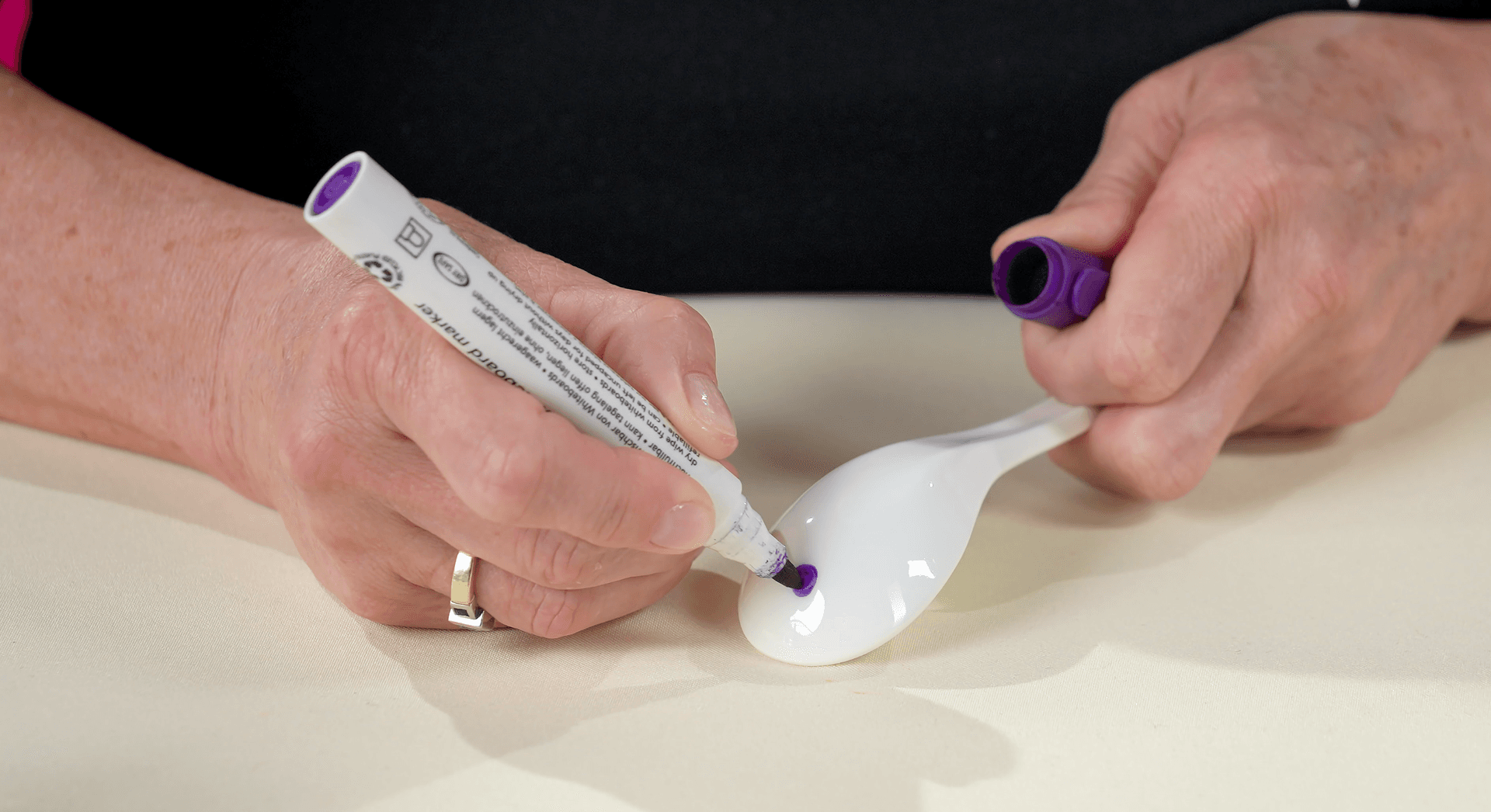
Step 1
Use a whiteboard marker to draw a figure or pattern on the back of a dry ceramic spoon. Tip: Make sure you draw thick lines and that your figure is connected.
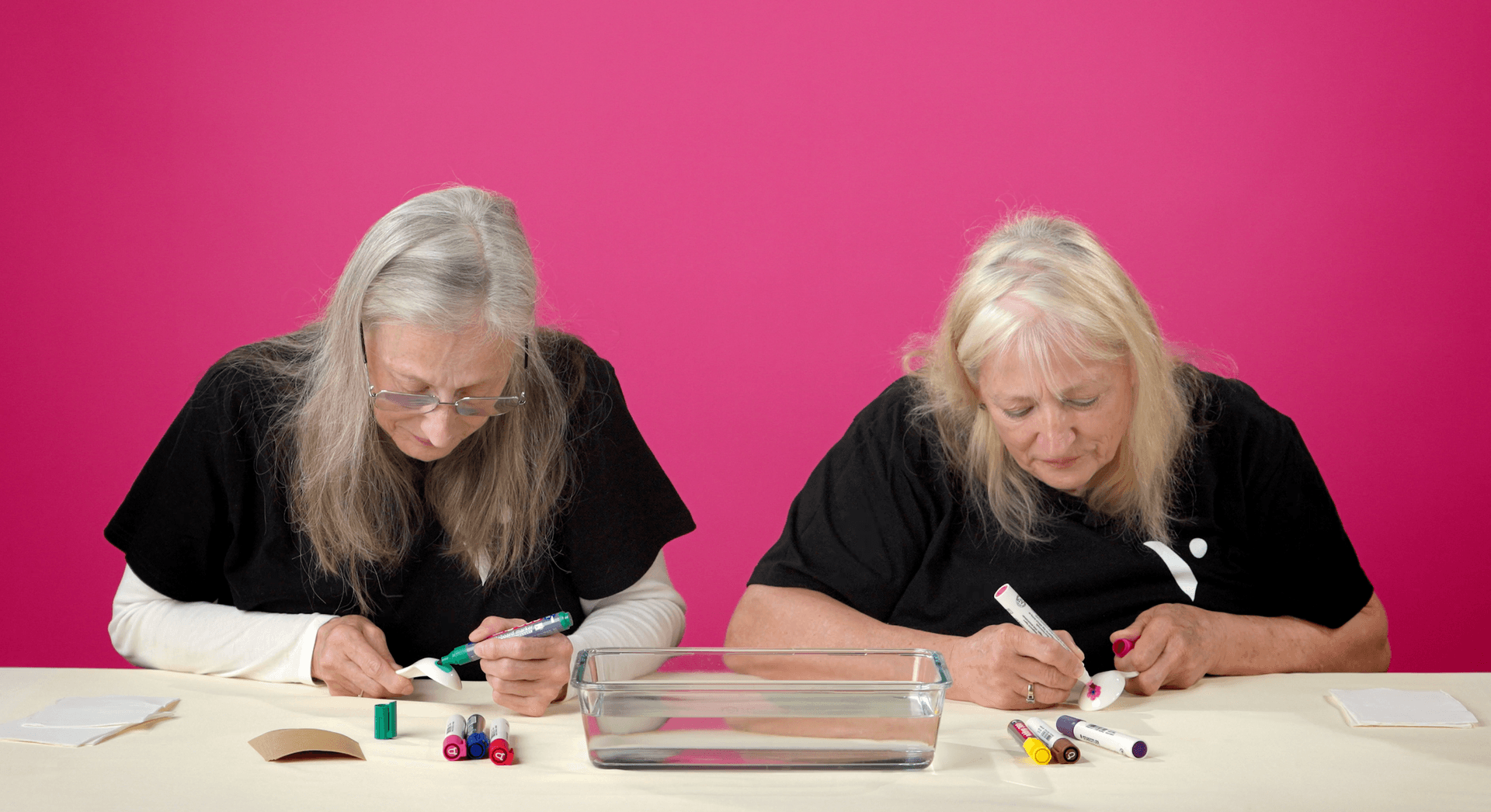
Step 2
Let the drawing dry for a few seconds so that the color sets.
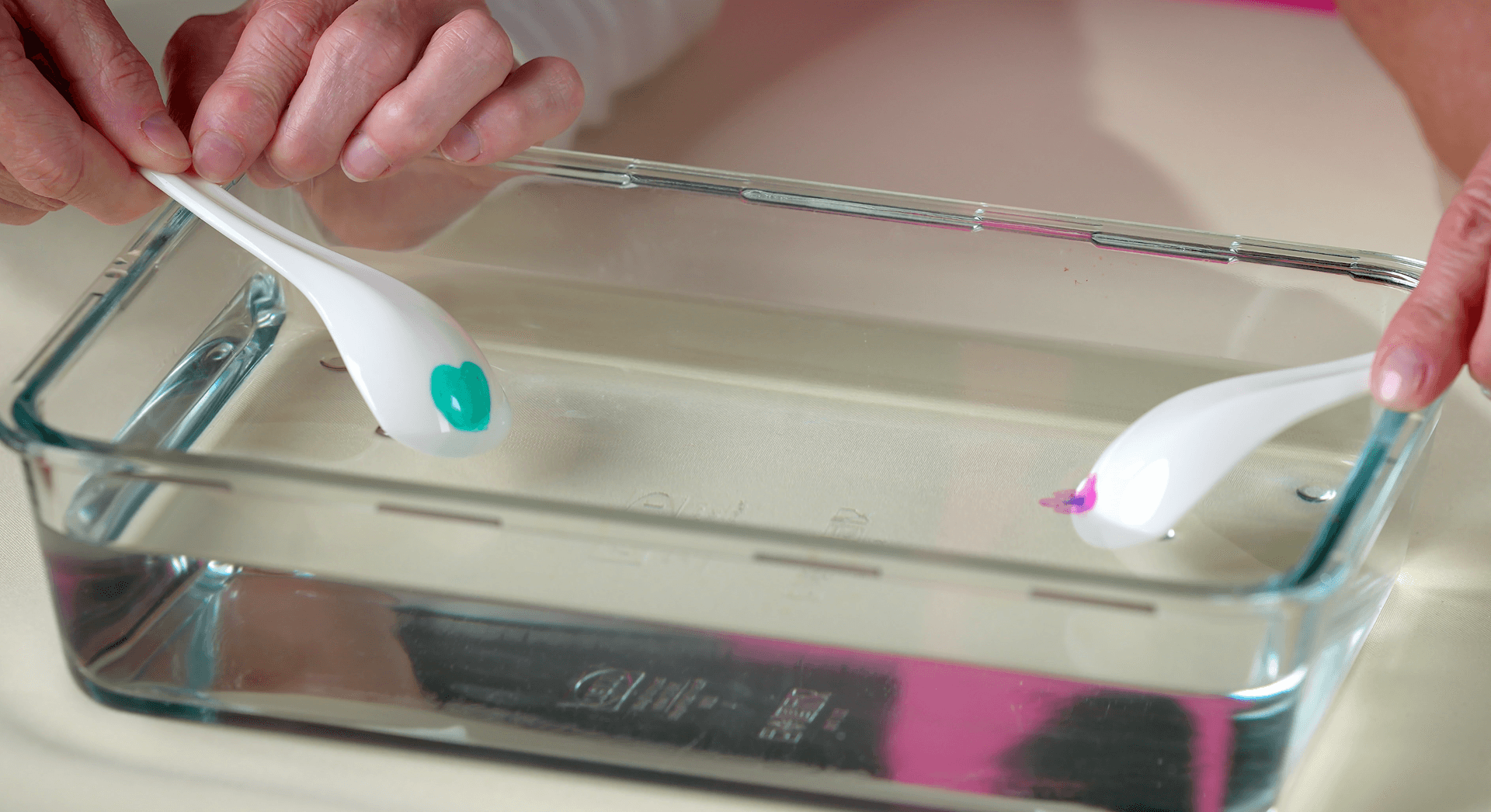
Step 3
Carefully dip the spoon into the container of water, turning it gently back and forth. The drawing should now come off the spoon and float on the surface of the water.
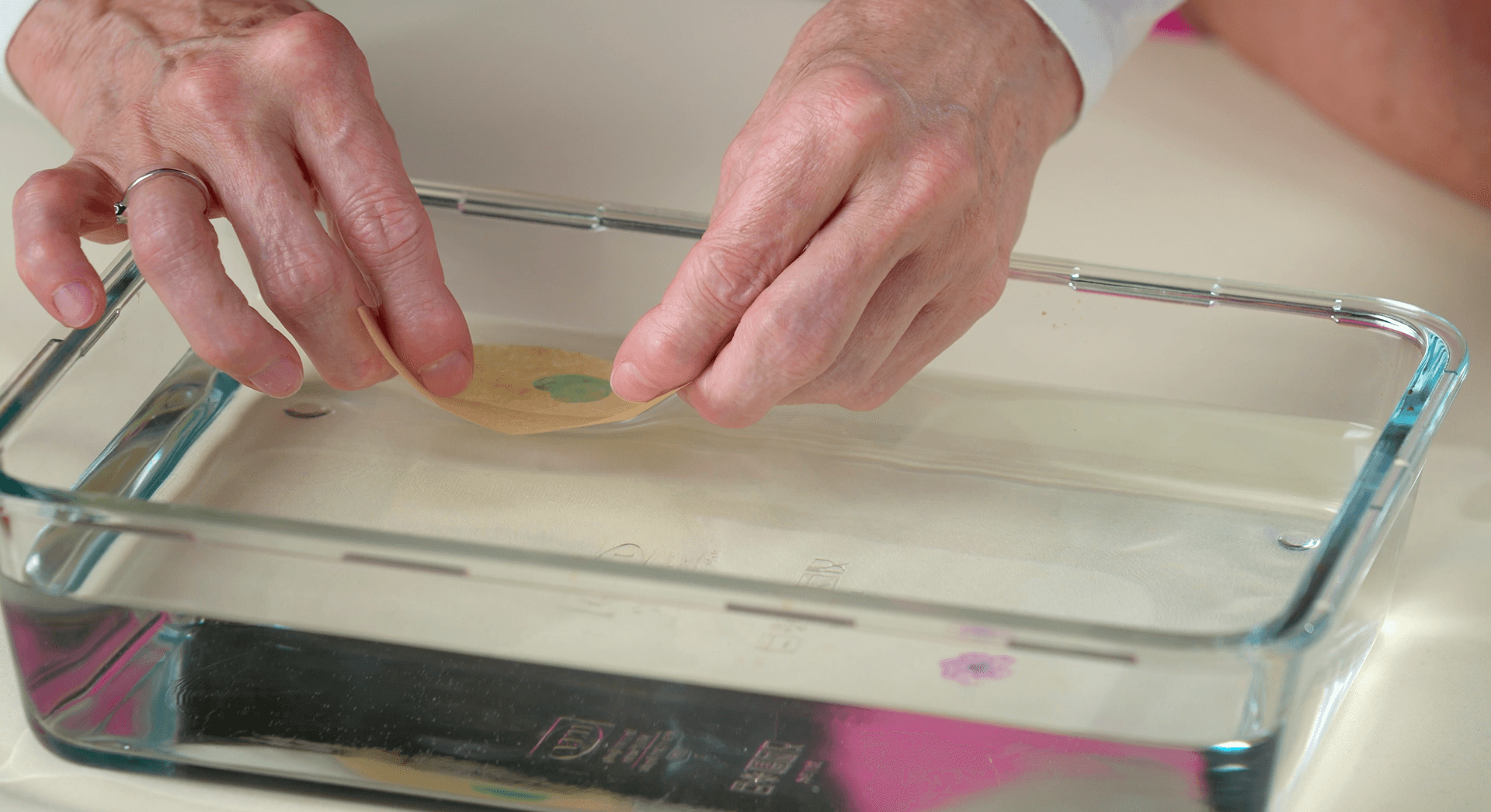
Step 4
To pick up your drawing, carefully place a piece of baking paper on top of the floating drawing.
Step 5
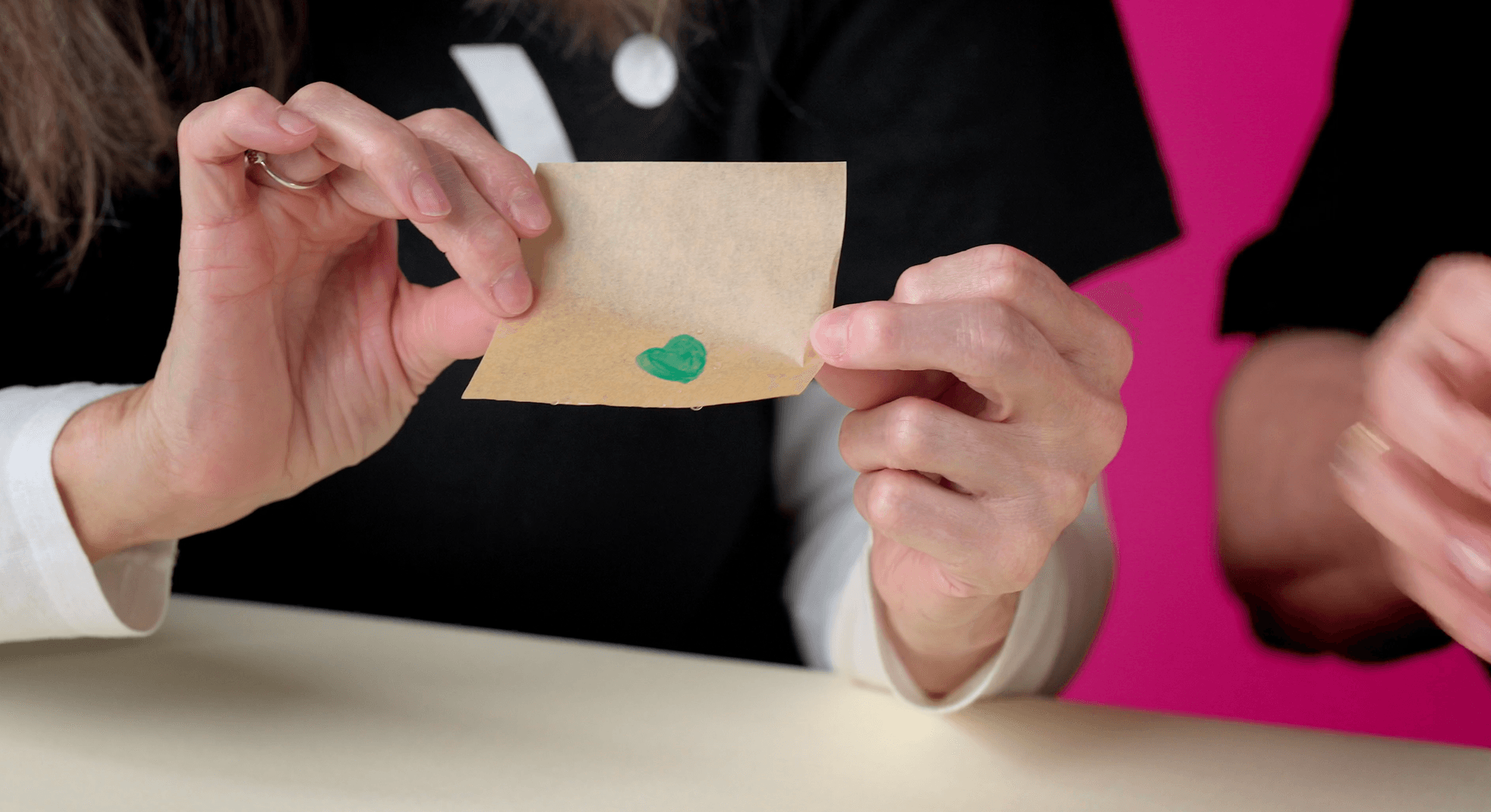
Carefully lift the baking paper with the drawing out of the water. The drawing is now transferred to the paper.Before drawing a new figure, dry your spoon thoroughly with paper towels.
Step 6
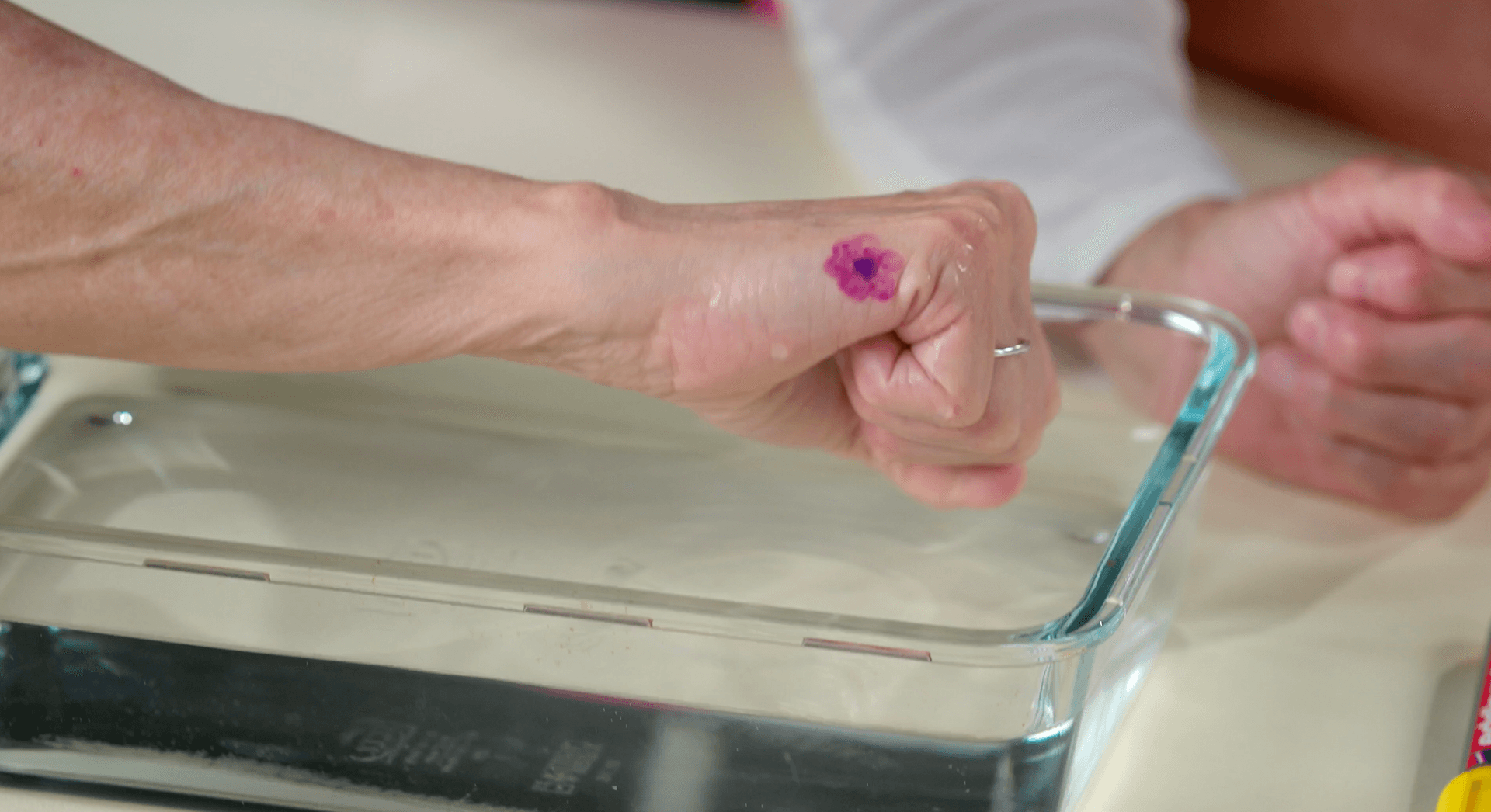
You can also use other surfaces, such as skin, to remove the drawing from the water.
Continue your research!
Do some colors work better than others?
You can also experiment with different patterns and lines of varying thickness.
And what happens if you drip some dish soap into the water behind your floating figure?
Background knowledge
At ISTA, research groups are also investigating the exciting properties of liquids. Björn Hof's team, for example, is researching the conditions under which water flows calmly and predictably, and when chaotic turbulence happens. This research helps us understand how ships travel quickly across the sea or how blood moves through our bodies.