Experiment
Clouds and heat
Would the world be warmer or colder without clouds?
You probably see clouds in the sky almost every day. But have you ever thought about the role they play in changing the ground's temperature? In this experiment, you will build two tiny worlds – one with clouds and one without – and see what happens.

With Scientist Bety Pechacova
Age: 23 years
Research: Atmospheric physics
Motto: "Stay curious, there’s always more to see."
How does it work?
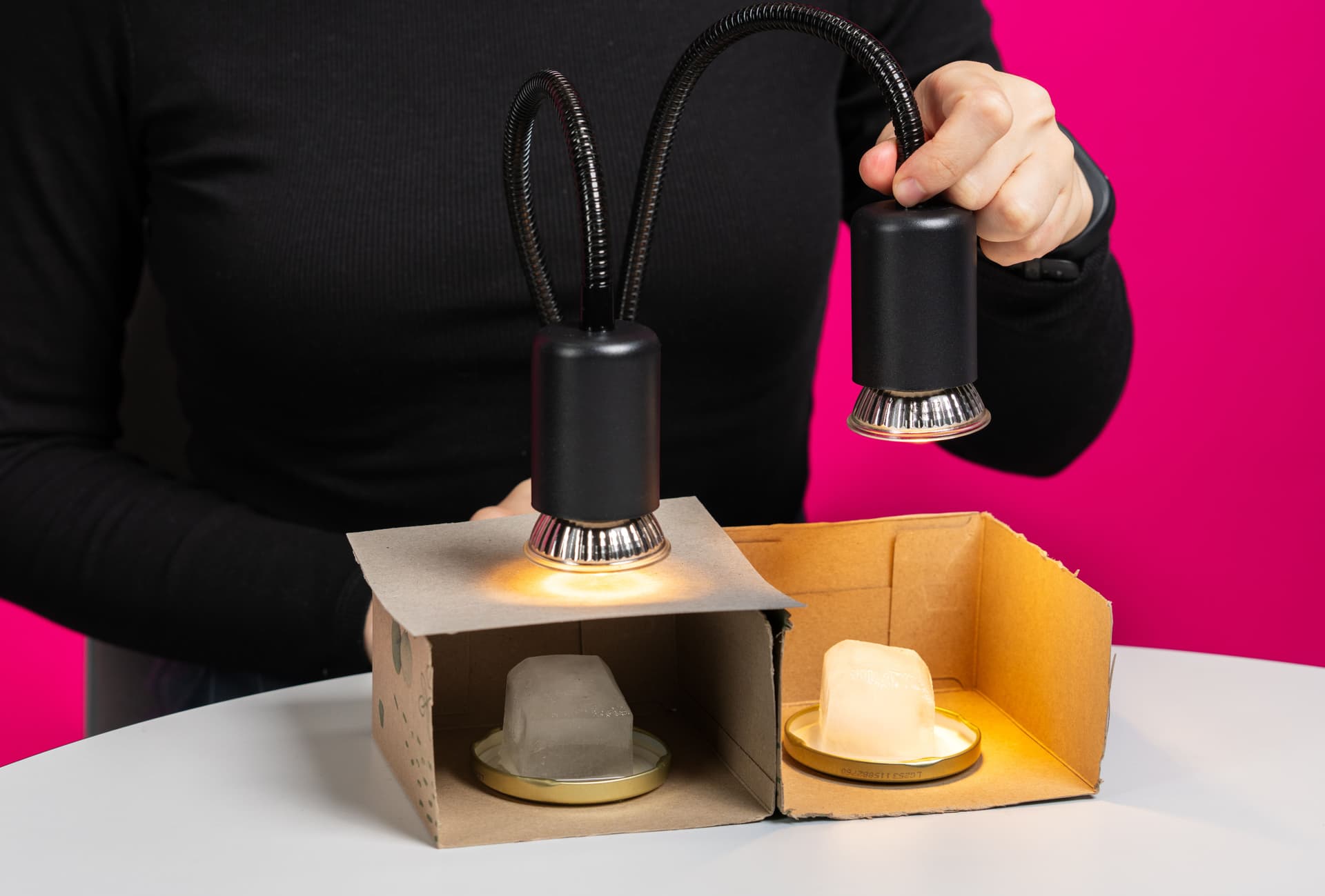
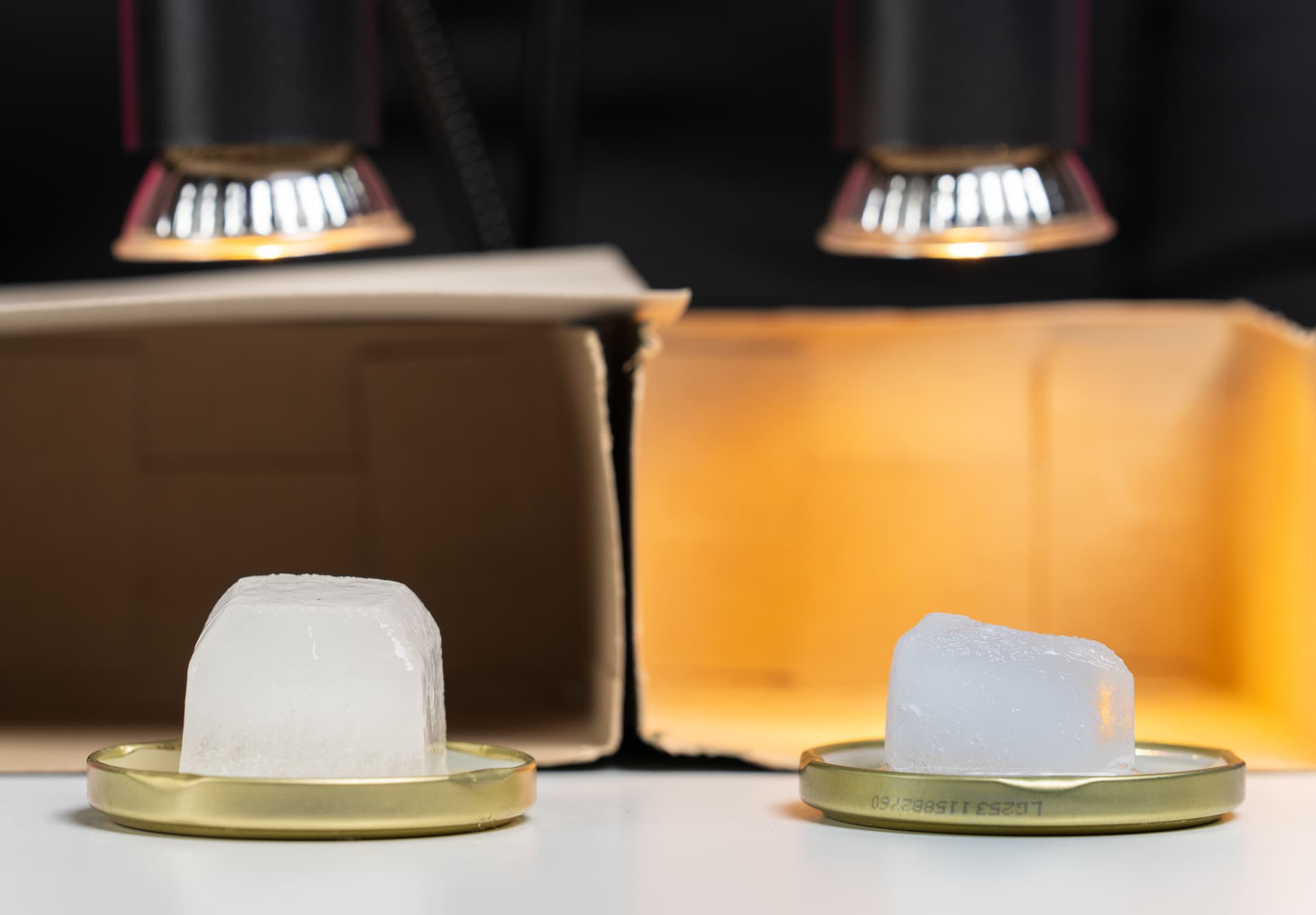
The Sun sends light and heat to the Earth. Some surfaces soak up this heat and get warmer, while others reflect it and send it away. Clouds can do both. They can reflect sunlight like a mirror, or keep heat near the ground like a blanket. That means clouds can sometimes cool the Earth and sometimes warm it. In our experiment, the “cloud” mainly blocks sunlight, so we mostly see the cooling effect of clouds.
Did you know?
At any moment, clouds cover about two thirds of the Earth. Usually, there are more clouds over the ocean than over land.
You will need:
a lamp with a warm light source (like a terrarium lamp or an old light bulb) OR a sunny day
a tissue box or a similar-sized box
a pair of scissors
ice cubes on small plates (that fit in the box) OR small thermometers
a piece of cardboard or thicker paper

Step 1
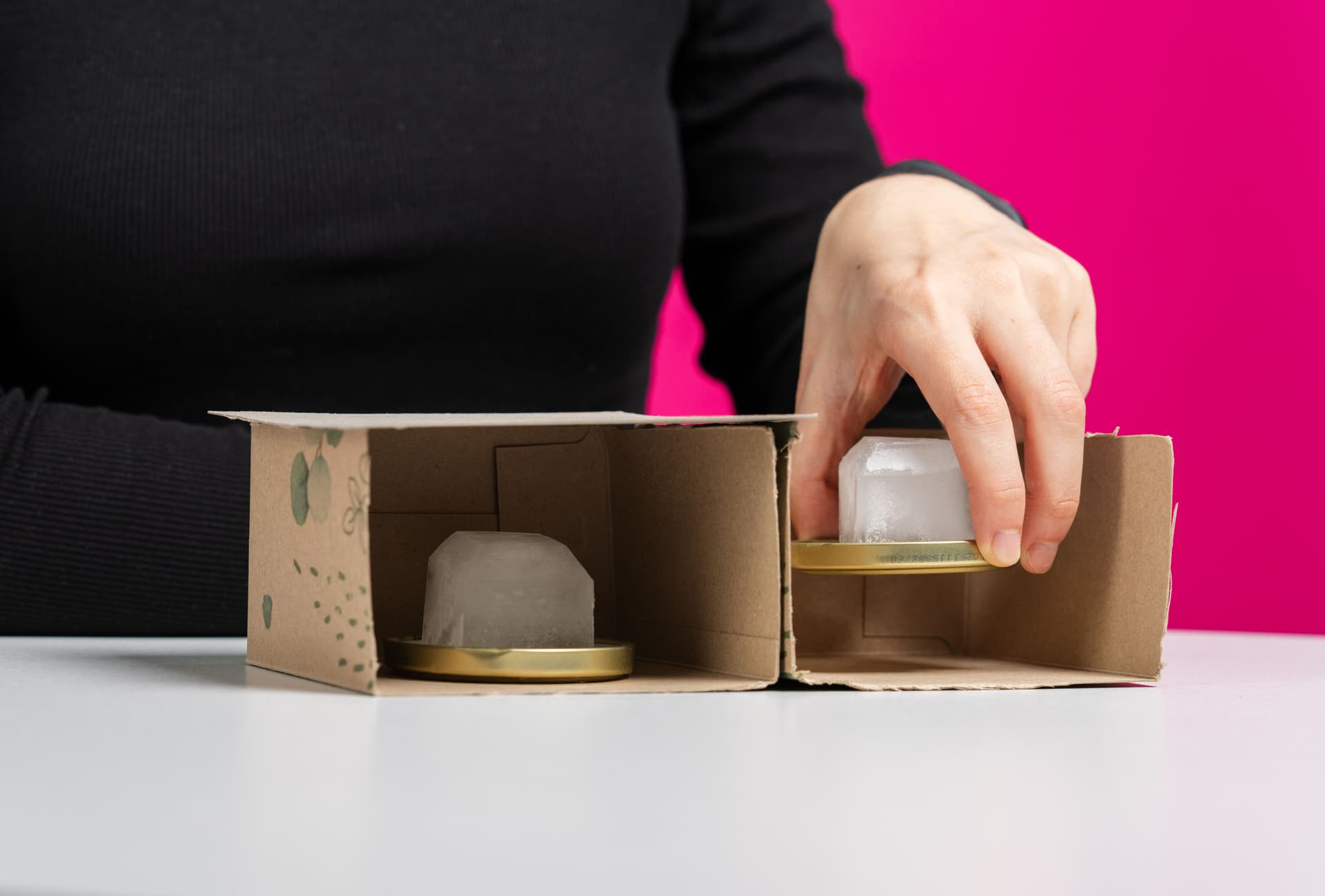
Cut off the top of the box and cut the box in half. These are your two tiny worlds.

Step 2
Cover one box with a piece of cardboard. This will be our “cloud”. The other box stays open like a clear sky.
Keep exploring!
Real clouds are more complicated than our cardboard cloud. Whether they cool or warm
the Earth depends on many things, including how thick they are and how high they are in
the sky. Try changing something about your cloud - its height, material, shape or color. What happens?
Clouds can also act like a blanket and slow down how fast heat escapes. After warming
your boxes, turn off the lamp (or move them out of the sunlight). Which box cools down
faster?
How does the temperature behave with different types of ground on Eearth? Can you
design an experiment with different surfaces and see which one warms faster?
Background knowledge
Scientists call the heating and cooling influence of clouds the “cloud radiative effect”. Understanding this effect is important for predicting weather and climate. At ISTA, the Muller group studies clouds using computer simulations – experiments where scientists create virtual worlds with different clouds and compare what happens.