Vista Science Experience CenterLogo of Vista Science Experience Center featuring stylized geometric shapes and text
  • Plan your visit
    • General information
    • Info for school groups
    • Group inquiries
    • Opening hours and directions
    • VISTA Coffee Lab
    • ISTA at a Glance
    • Contact
    • FAQ
    • Accessibility
  • Program
    • Exhibition
    • Tours
    • Workshops
    • Events
    • Training Courses
    • Sommercamps
    • Neuroscience Academy
    • Artist Residency
  • Explore
    • Article
    • Experiments
    • Teaching ideas
  • About us
    • Mission
    • VISTA Science Experience Center
    • Team
    • Supporters
    • Press
    • ISTA
  • Book
de
Vista Science Experience CenterLogo of Vista Science Experience Center featuring stylized geometric shapes and text
de
  • Plan your visit
  • Program
  • Explore
  • About us
  • Book
  • back to Overview

Experiment

QR codes and their magical properties!

QR codes are everywhere, from restaurants to shops and museums. They make it quick and easy to share information. You just need to point your phone’s camera at them – it’s very useful! In fact, QR is actually short for “quick response”.But have you ever wondered what makes QR codes so popular? It turns out that they have some amazing properties that seem almost magical. In this experiment, we are going to explore QR codes and what they can do.

Download Experiment

How does it work?

Just like bar codes used on supermarket items, QR codes are simply a way of writing information so that computers or phones can read it more easily – just as you can read these words!

It is easier to for a computer to distinguish between black and white squares of the same size, than to distinguish between letters (especially since different languages use different symbols and there are so many different fonts!). However, what makes them really interesting and useful is something called “error correction”. This means that even if the QR code gets a little damaged, your phone can still understand it and read the information! Let’s give it a try and see how it works!

Fun Fact #1

Japanese characters, known as Kanji, are much more varied than the letters we use in English. This means they cannot easily fit into traditional bar codes, which can only contain quite a limited amount of information. This motivated Japanese computer scientists to develop a solution that could represent more data and so QR codes were born there in 1994!

You will need:

  • a smartphone and an app that can read QR codes (if your camera cannot do this, there are many free appsavailable )

  • a printer

  • access to the internet

  • some opaque paint (e.g. acrylic, nail polish, white-out) and a brush; alternatively, scissors

  • a few sheets of paper

  • a pen

Step 1

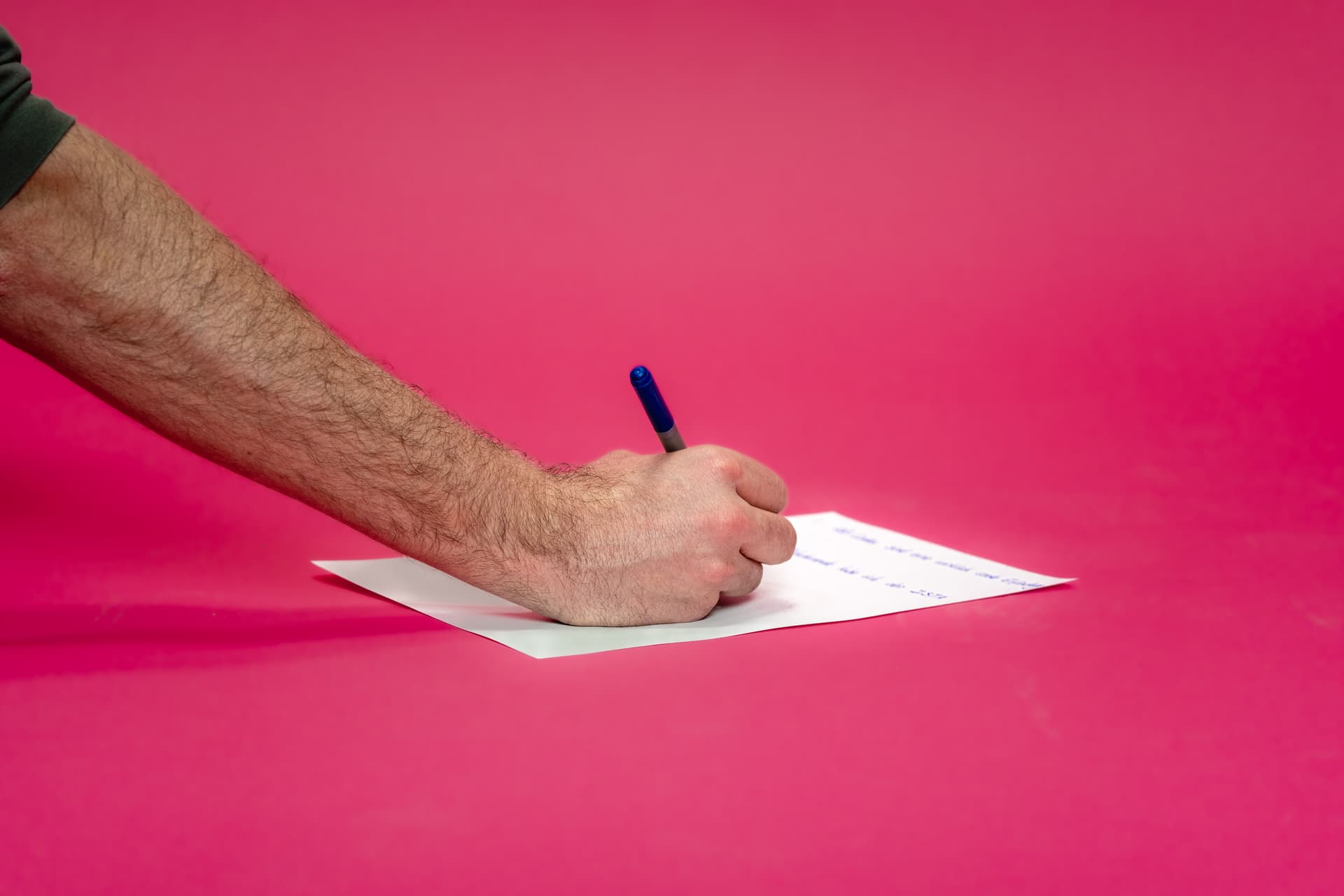
Write five sentences about things you like. Use six to ten words for each sentence.
Step 2

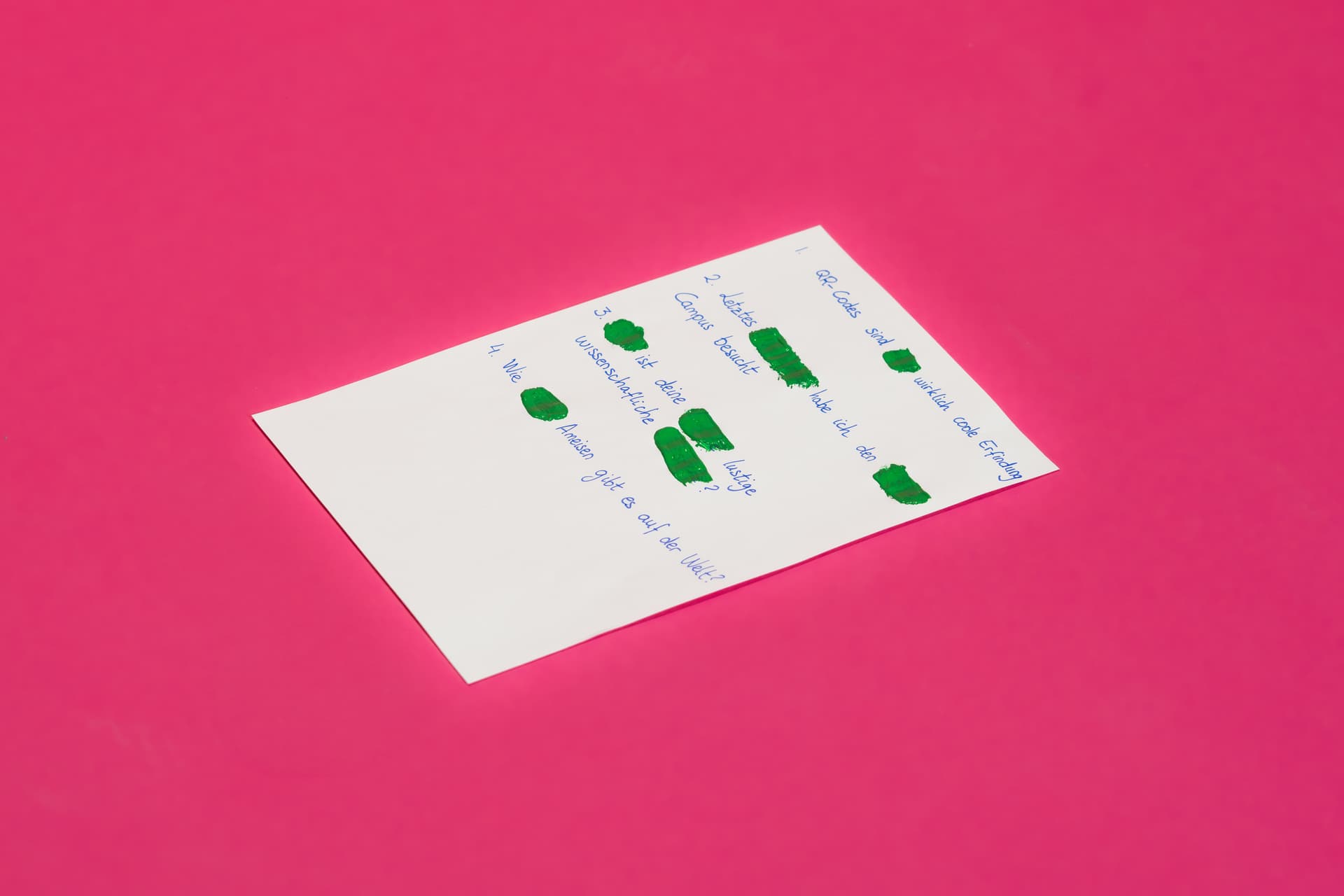
Now, paint over some of the words (or cut them out with scissors): one word from the first sentence, two from the second one, and so on.
Create your own QR code

You can create your own QR code online here: https://genqrcode.com/ or https://mini-qr-code-generator.vercel.app/. These sites are well suited for this purpose—we recommend setting the “error correction level” to “highest” on the second website.

Keep exploring!

  • What if the section you paint (or cut) is in the middle of the QR code? Can you paint as much surface as when you start with the bottom corner? What if you draw on it with the pen? How much can you draw before it stops working?

  • Can you figure out if there are parts of the QR which are more important for reading it? That is, parts where painting a smaller surface already makes it stop working? For example: What happens if you paint overone of the big squares? Why? Think of the second cool fact we learned above.

  • What happens if you cut out one of those big squares and glue it onto the bottom right corner?

  • The codes we gave you all encode the same website, even if they look different. QR codes use a method to ensure no big white or black areas exist, as this would make it harder for the phone to identify the individual squares. There are different ways to do this, which is why we can have different QR codes all encoding the same information. What happens if you make a new QR code by cutting and assembling parts from different QR codes? Does it still work?

Fun Fact #2

One advantage of QR codes over bar codes is that they can be read by your phone, no matter the direction you scan them from. This is because of the big squares on three of the corners. They tell the phone which way is “up”, or in other words: “Turn the QR until the bottom right corner does not have a big square.”

Background knowledge

QR codes are an example of something called “error-correcting codes”.They help send information even if it gets “damaged” along the way. These techniques are actually used for many applications. Beyond QRs, other examples are CDs that might get scratched, or satellite communications, where part of the transmission might get lost.

Error-correcting codes use math to fix problems more effectively than just sending the information several times. They are better at handling damage because they don’t rely on repeating the same information over and over, which might still miss the same parts each time.

New types of codes are still being developed today. At ISTA, two professors have done research on this topic: Marco Mondelli worked on “Polar Codes”, which are even more efficient that QR. These have nothing to do with cold temperatures, but rather with something called polarization: a way to transform the data so it becomes easy to tell which parts decode correctly and which can be discarded. And Krzysztof Pietrzak co-invented so-called “Non-Malleable Codes”. That means you can either recover their full original message or no part of it at all, which is really useful in preventing messages from getting modified while being delivered.

Subscribe to Newsletter

Science never stands still…
The VISTA newsletter keeps you updated on events, exhibitions, and other offerings.

I want to receive the VISTA newsletter and accept the Privacy Policy.

VISTA Science Experience Center
Institute of Science and Technology Austria (ISTA)
Am Campus 1
3400 Klosterneuburg

Contact Information

Direction
Contact

Footer Navigation

Child Protection Concept
Supporters

Legal Information

Imprint
Data Protection
Terms and Conditions

Social Media Links

Step 3

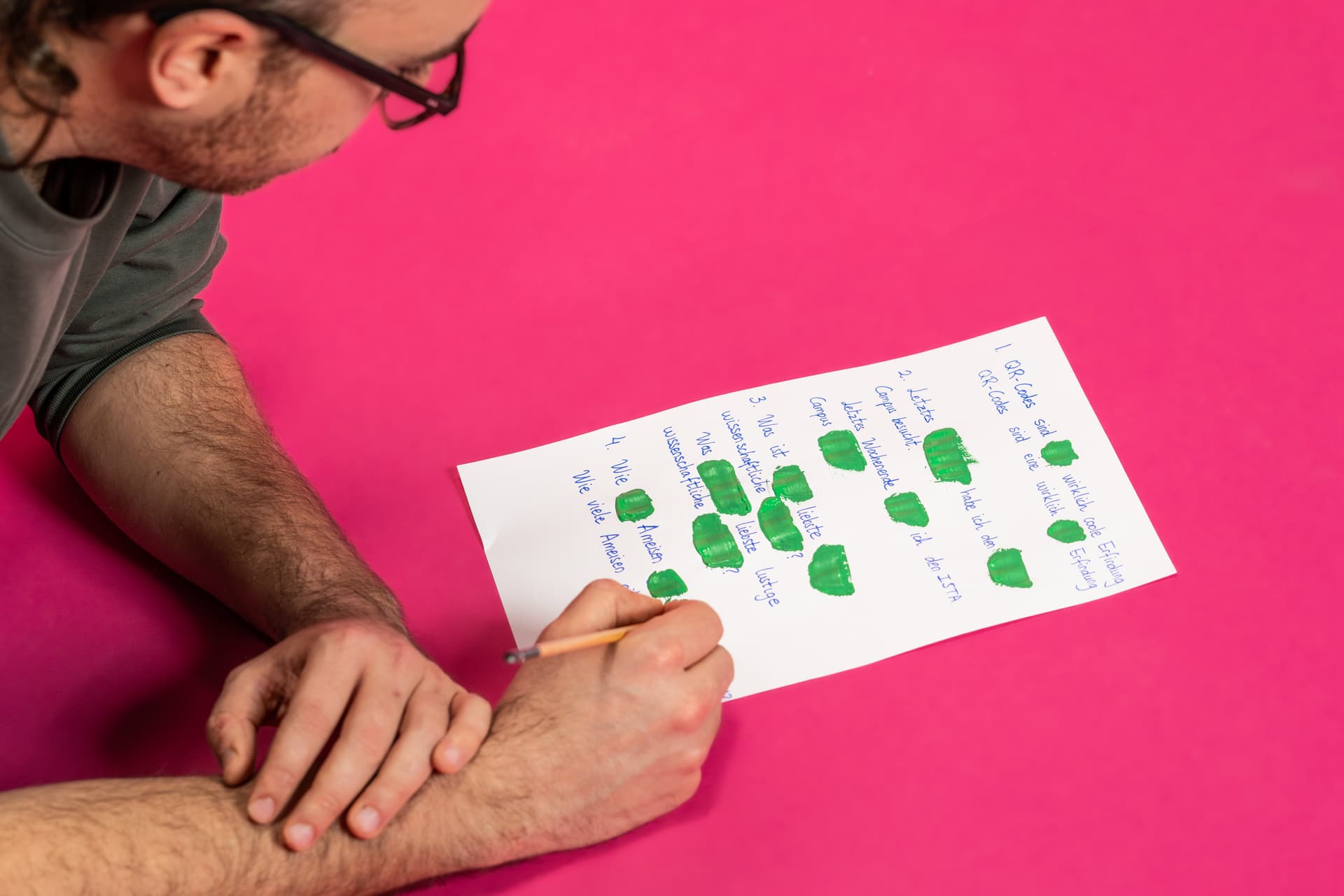
Now do the same, but write each sentence twice. Remove some words as before: on the first sentence one random word per copy, in the second two random words per copy, etc.

Step 4

Observe with your friend or family member: is it easier than before to recover the original sentence? Why is that, even though we deleted the same number of words per sentence?
Step 5

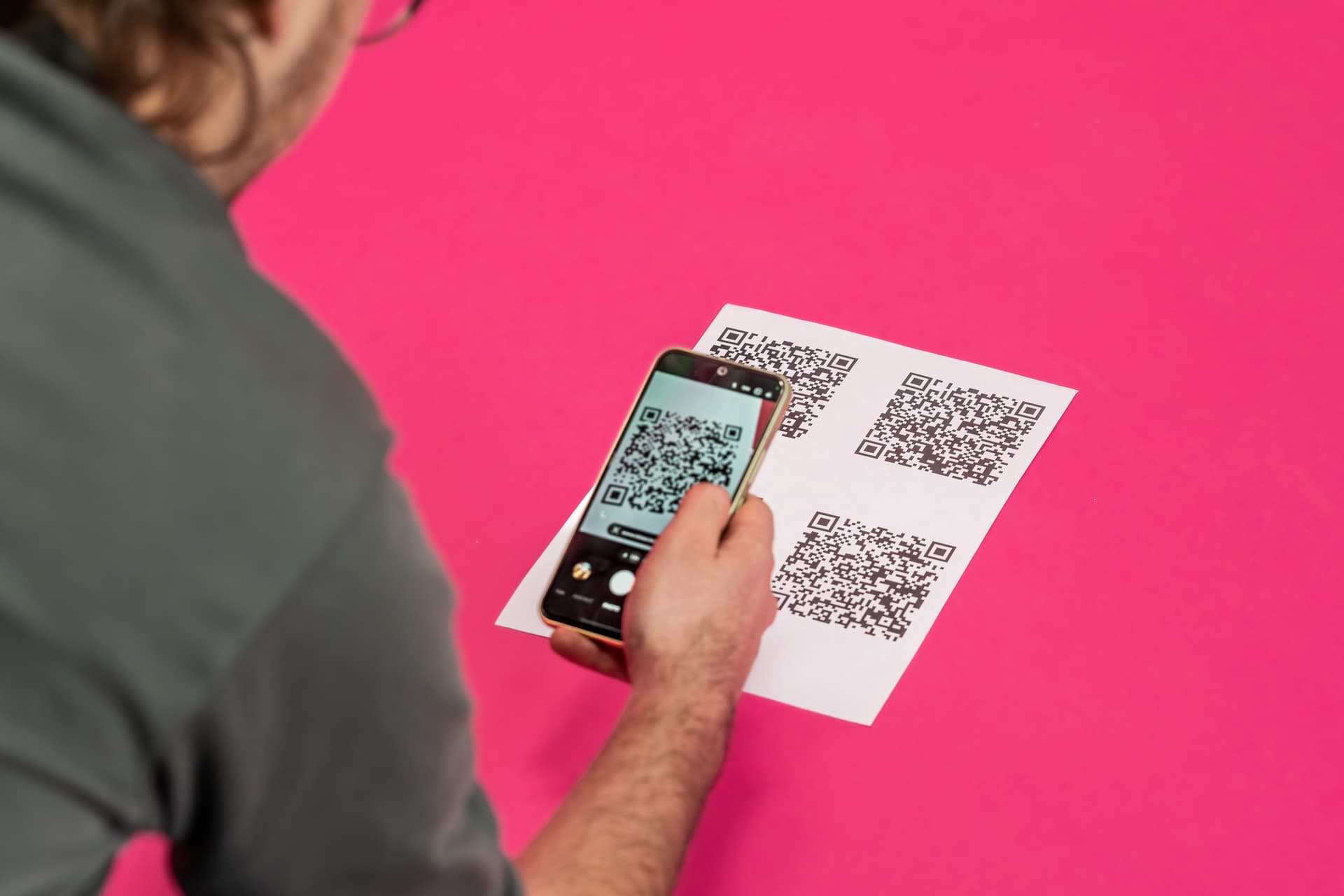
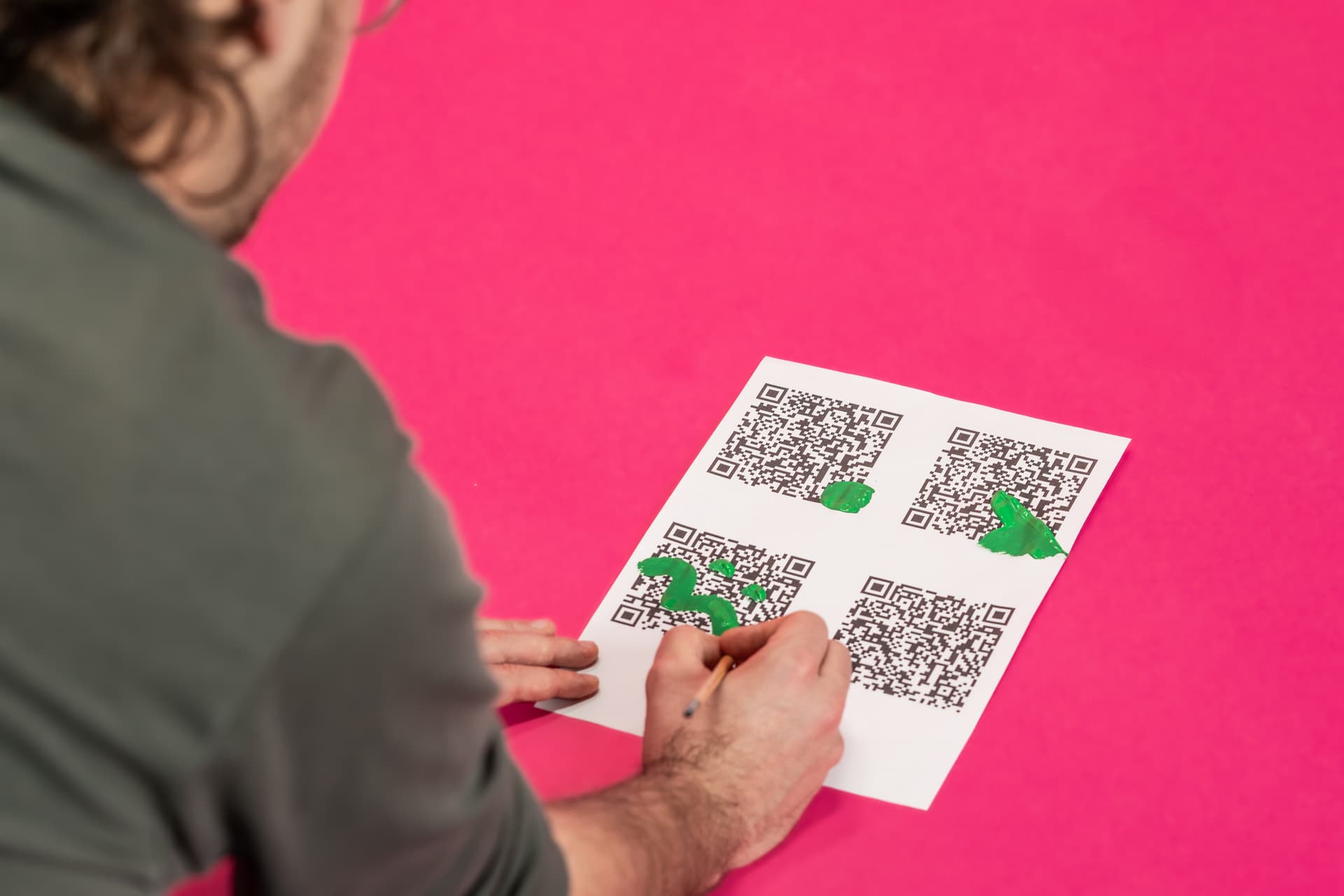
Let’s try this with QR codes! Scan the QR code with your phone to make sure it works.
Step 6

Now paint over (or cut) a small piece of the bottom right corner (the one without the big squares) and try scanning it again. Does it still work? If so, try painting or cutting a bit more. How much can you change before it stops working?

VISTA Science Experience Center
Institute of Science and Technology Austria (ISTA)
Am Campus 1
3400 Klosterneuburg

Footer Navigation

Child Protection Concept
Supporters

Contact Information

Direction
Contact

Legal Information

Imprint
Data Protection
Terms and Conditions

Social Media Links