Experiment
Skytale
Encrypting messages … in the kitchen?!
Have you ever wondered how people sent secret messages before computers existed? When a message is changed so that it becomes unreadable, we call that encryption. Only someone who knows the matching secret key can restore the original message. Today you'll learn how to encrypt messages using everyday things from your kitchen – with a method that's 2,500 years old!

With Scientist Guillermo Pascual Perez
Age: 30 years
Research: Cryptography
Motto: “Objects around you can have many uses!”
How does it work?
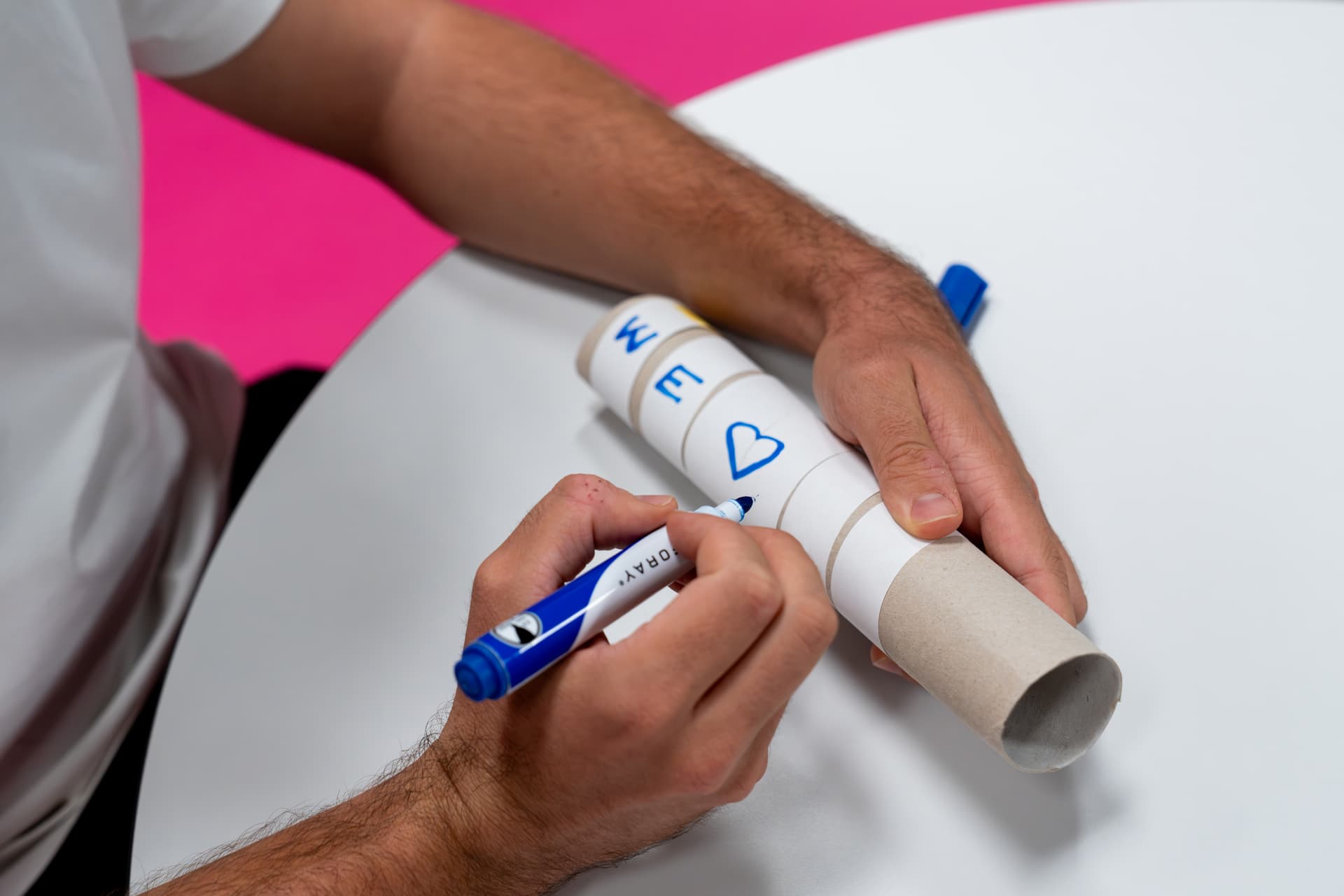
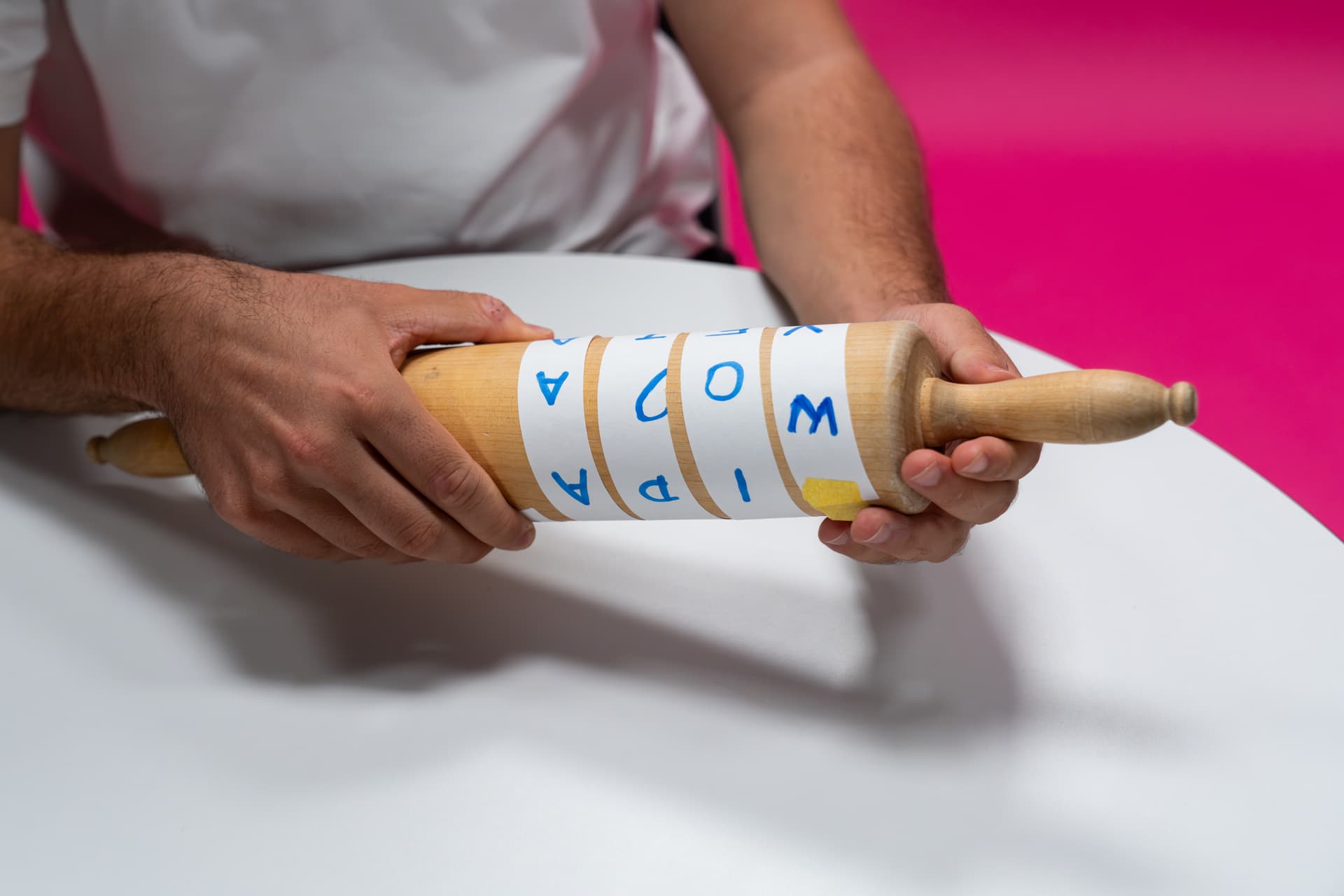
According to ancient sources, the ancient Greeks encrypted their messages using scytales: pairs of wooden rods of exactly the same thickness, around which a leather strip was wound. If you wrote a message on the wound leather and then unwound it, the letters became scrambled and almost impossible to read. This allowed the owners of matching rods to exchange secret messages.
Let's see how you can recreate this with objects from your own home!
Did you know?
Encryption has been around for thousands of years but it's only in the last 50 years that it has become something the general public uses too.
Let’s get started!
With a few everyday objects from your kitchen, you can try out for yourself how this ancient encryption method works. Build your own scytale and send secret messages to friends or family!
You will need:
A cardboard tube, a rolling pin, or another cylindrical object
A sheet of paper, at least A4 size
Scissors
A marker or pen
Tape
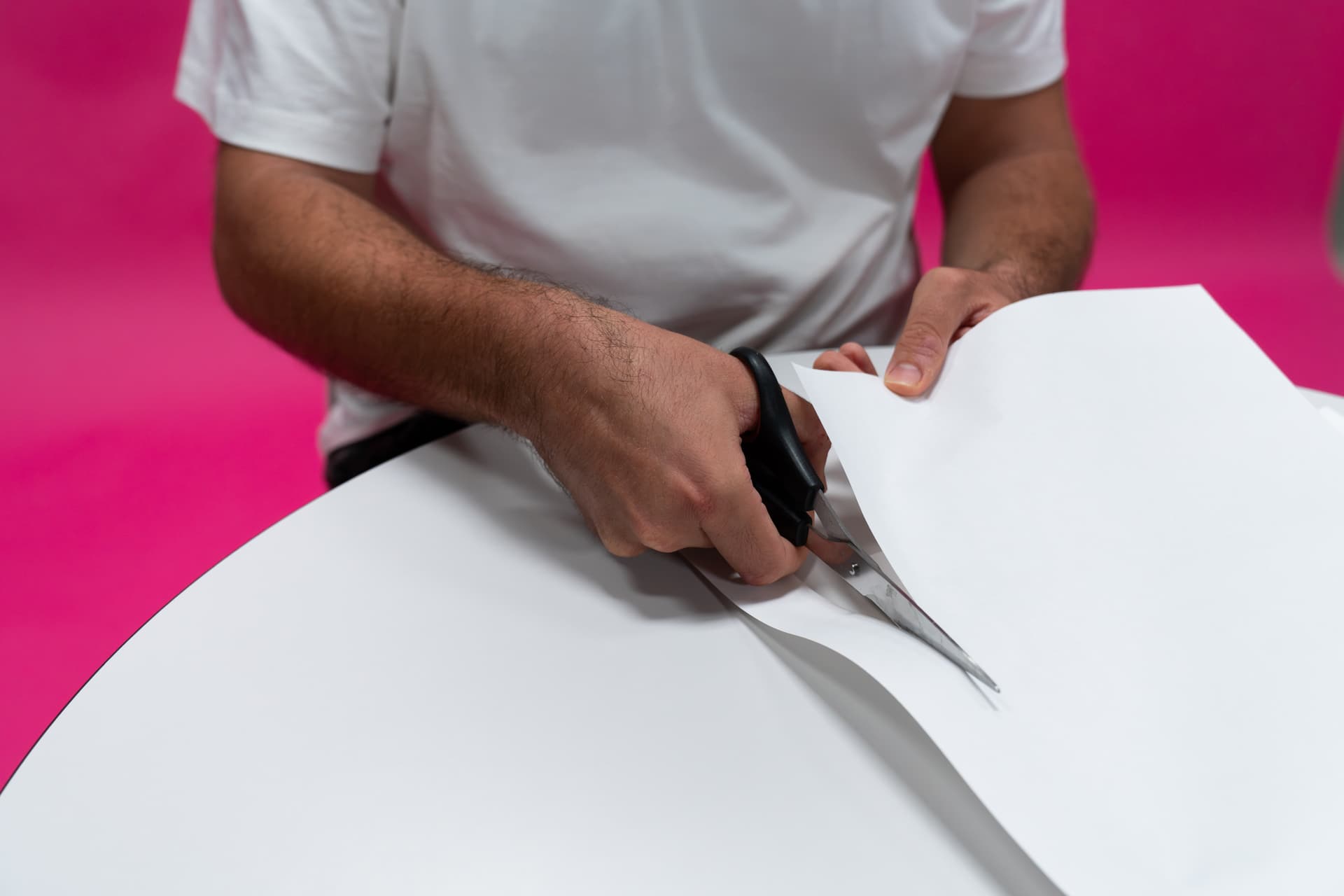
Step 1
Cut a few strips of paper with the scissors – about as wide as your thumb and as long as possible.
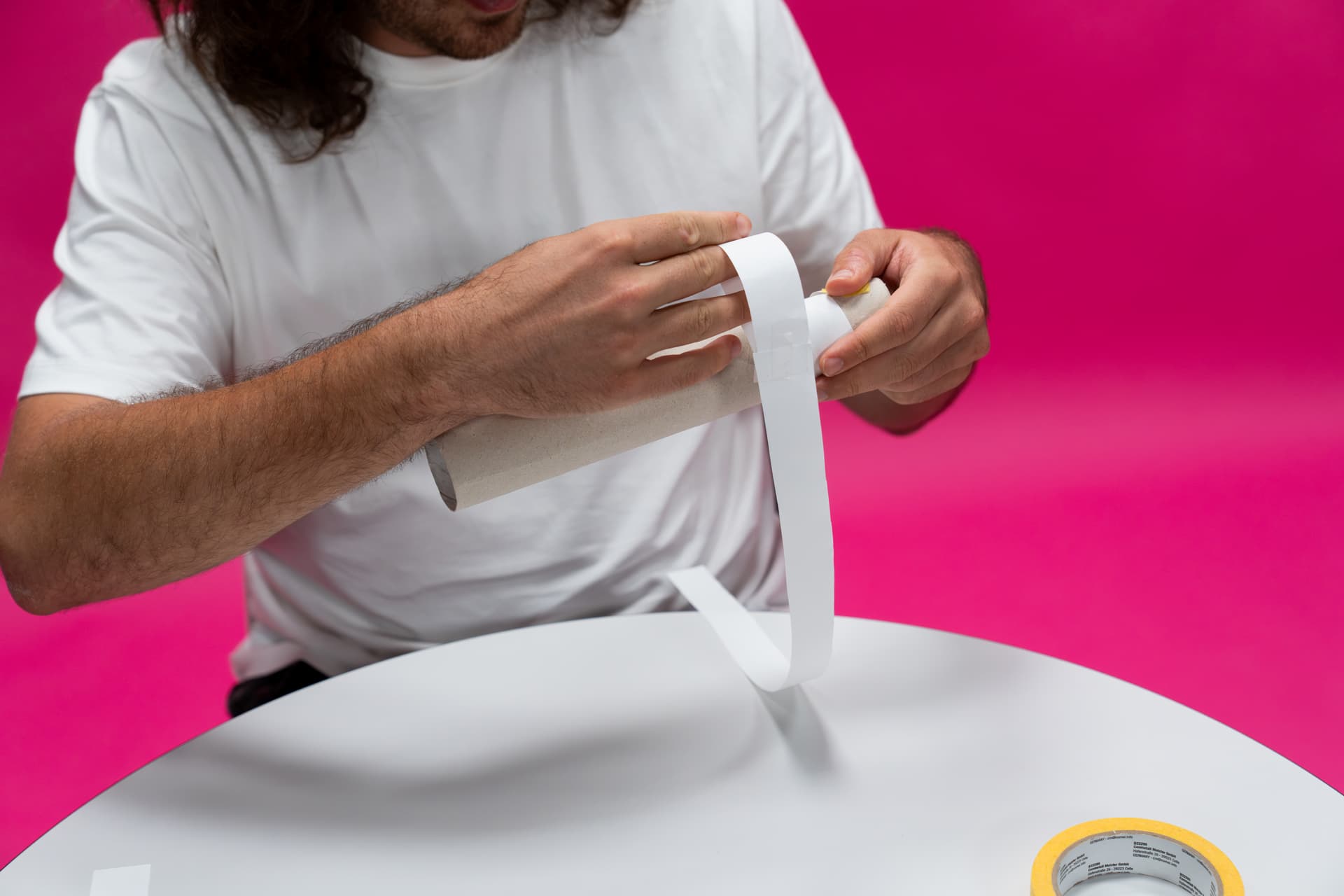
Keep exploring!
Mark the letters of the first word of your message and unwind the strip again – can you spot a pattern in the unrolled strip?
Have someone encrypt a new secret message, maybe using a different cylindrical object, and give you only the paper strip. Can you figure out the message using just the strip and the pattern from above?
Some researchers believe this method may also have been used to verify the sender – to make sure a message really came from a specific person. How might that have worked?
Answer
It's quite difficult to make several cylinders with exactly the same diameter – even if you have the paper strip in hand. If a received message fits perfectly onto your own cylinder, it most likely came from the person who owns the matching cylinder. Today there are many objects of standardized sizes, like cardboard tubes – but 2,000 years ago, that definitely wasn't the case!
Background knowledge
Ever since we learned to communicate, we've also tried to do it secretly whether for state secrets or private conversations. Today we mostly use the internet for this and have developed incredibly complex tools to protect our communication.
Krzysztof Pietrzak's research group at ISTA works on how conversations in messenger apps can be encrypted – in a way that keeps them private while staying fast and practical to use.