Young Talents Club Experiment
Acidic, basic, colorful – your DIY pH scale
What exactly is pH?
The pH is a chemical measure that indicates how acidic or alkaline (basic, often colloquially called “soapy”) a liquid is.
You can think of it as a scale from 0 to 14:
• 0–6 = acidic
• 7 = neutral
• 8–14 = basic
The lower the number, the more acidic the solution. The higher the number, the more basic it is.
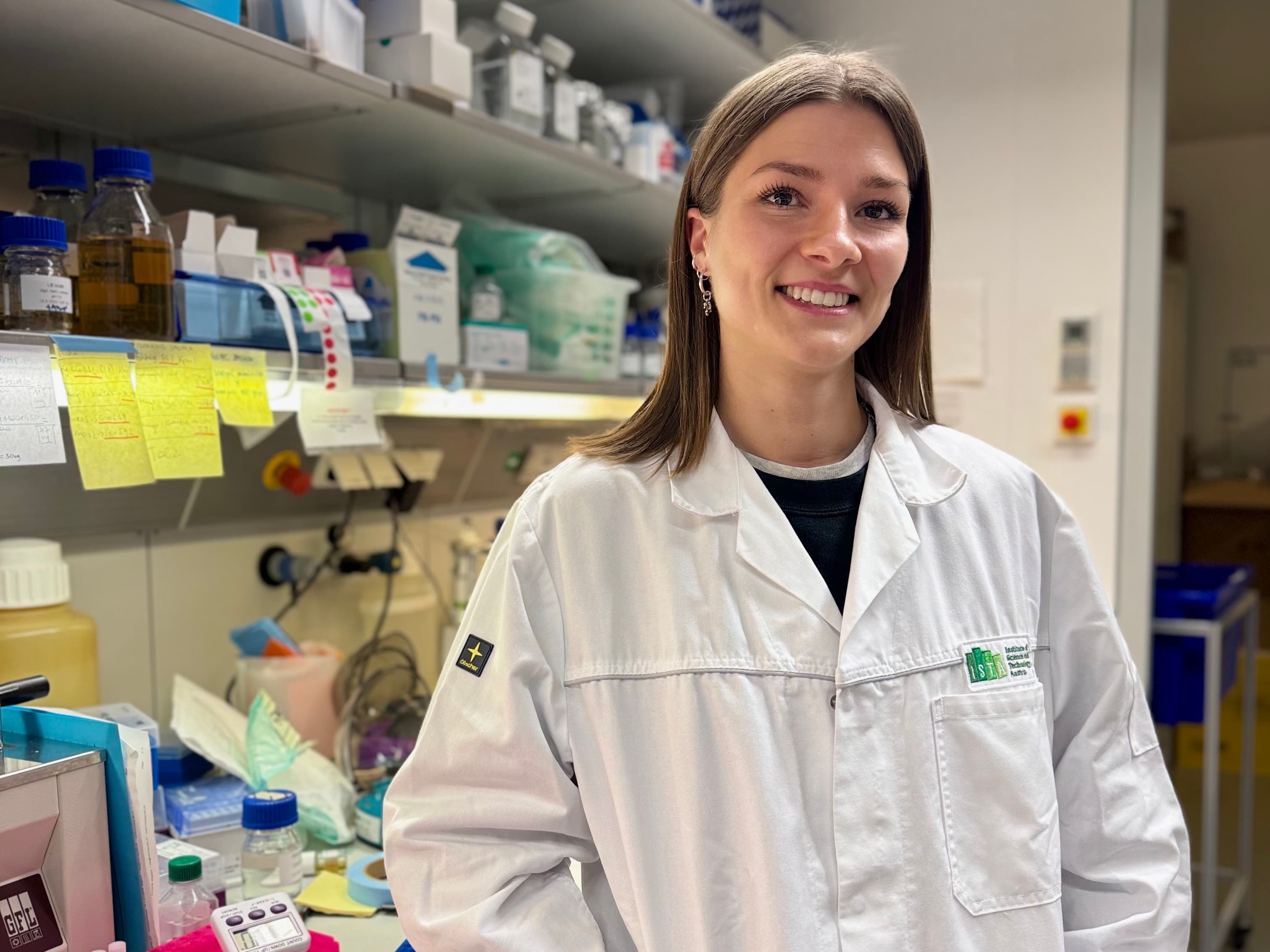
With Scientist Isabelle Mayer
Age: 33 years
Research: Cellular Morphodynamics
Isabelle, a PhD student in the Sixt research group at ISTA, is working to better understand how our cells’ motility machinery functions. Her project focuses on a specific signaling pathway that lets cells interact with structures inside and outside the body. As a model system, she uses immune cells in cell culture, which she examines using various microscopic techniques to learn more and more about this signaling pathway.
How does it work?
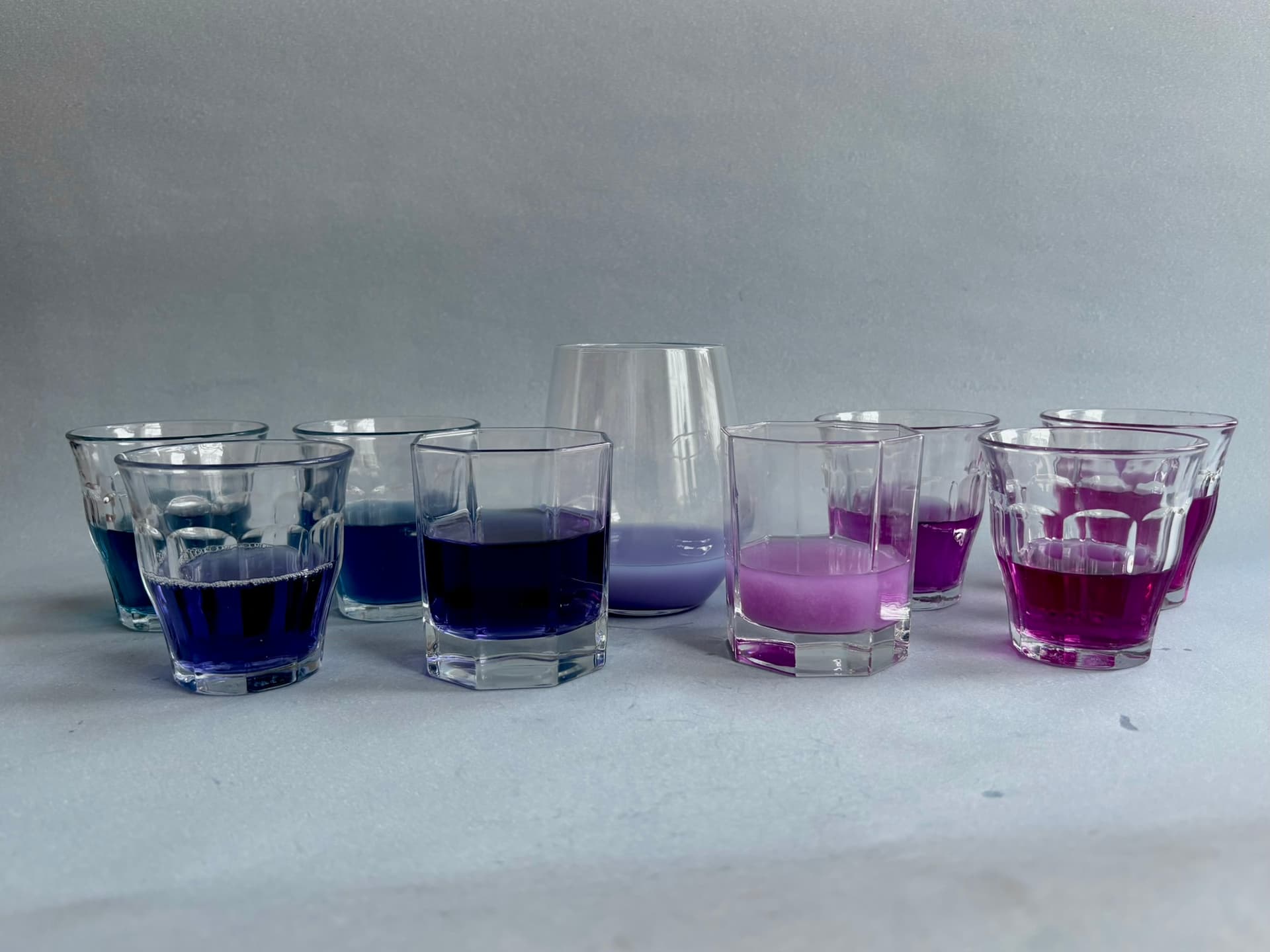
Substances that help us classify solutions on the pH scale and better understand chemical processes are called pH indicators. They change color depending on the pH level, thereby revealing whether a solution is acidic, neutral, or basic. Based on the color change, we can determine the approximate pH value.
Exciting fact
The pH value plays an important role in many processes, such as:
the effectiveness of cleaning products
natural processes (e.g., in water or soil)
our sense of taste
cell behavior
You will need:
Materials:
Electric kettle/pot
Bowl
Disposable gloves
Measuring cup
Glasses
Strainer
Red cabbage
Test reagents for creating the pH scale:
Apple juice
Yogurt
Water
Lemon juice
Vinegar
Soap solution
Baking soda
Washing soda
Milk
Make your pH indicator
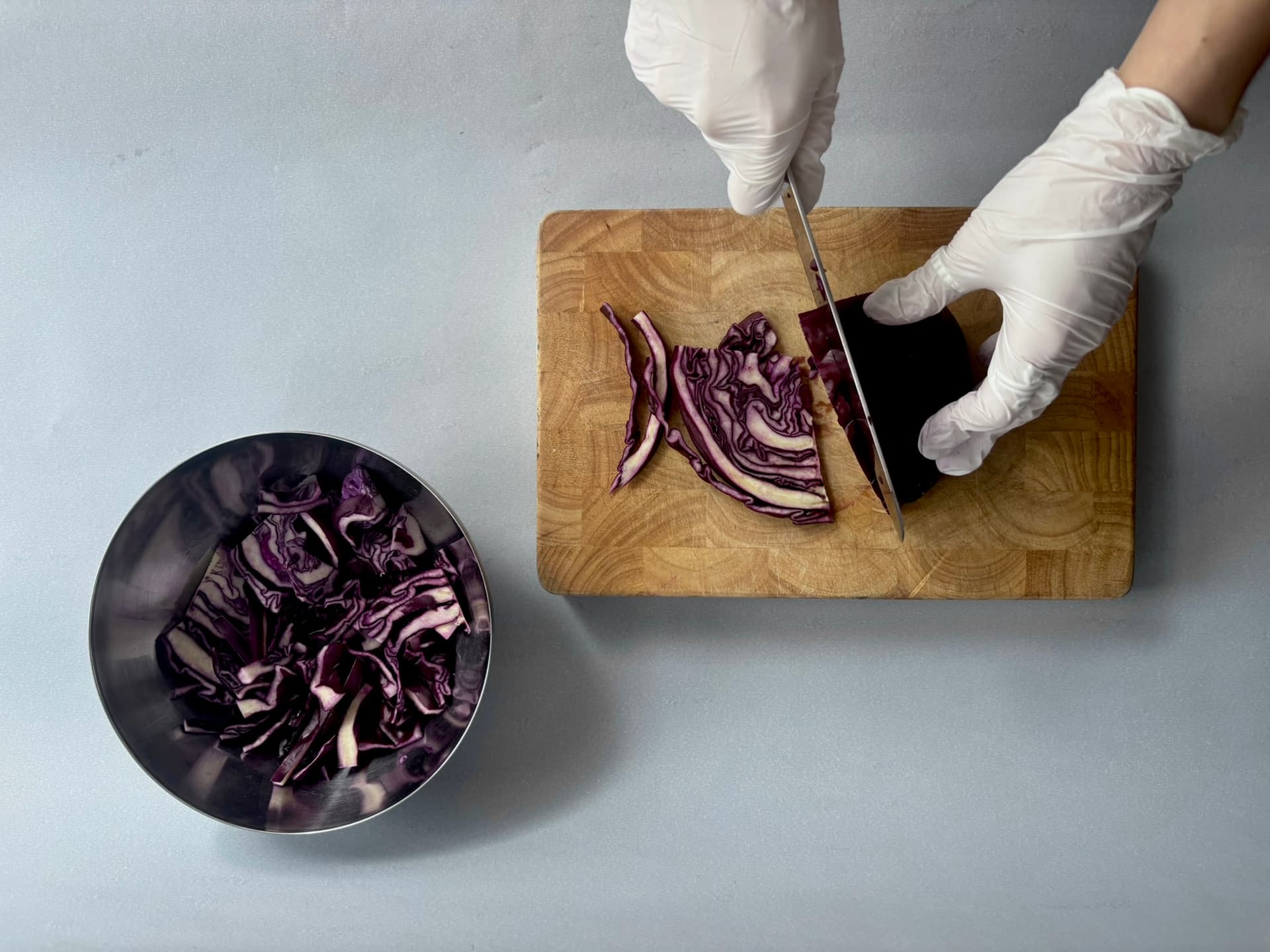
Step 1
Bring 500 ml of water to a boil and finely chop about 250 g of red cabbage.
Tip: Use disposable gloves to protect your hands from staining by the red cabbage and, if necessary, from your test reagents.
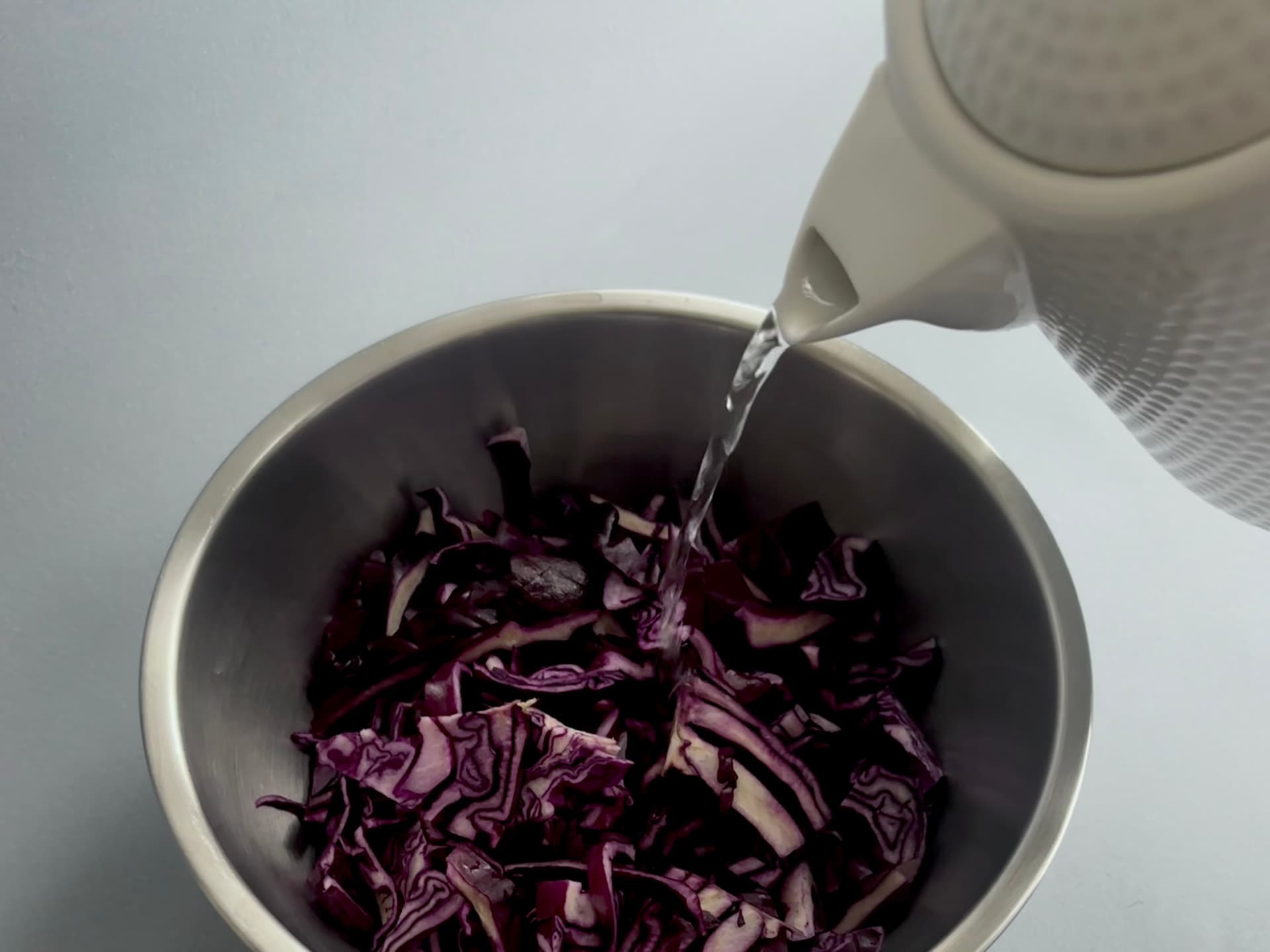
Step 2
Pour hot water over the red cabbage, then let it sit for 10–15 minutes.
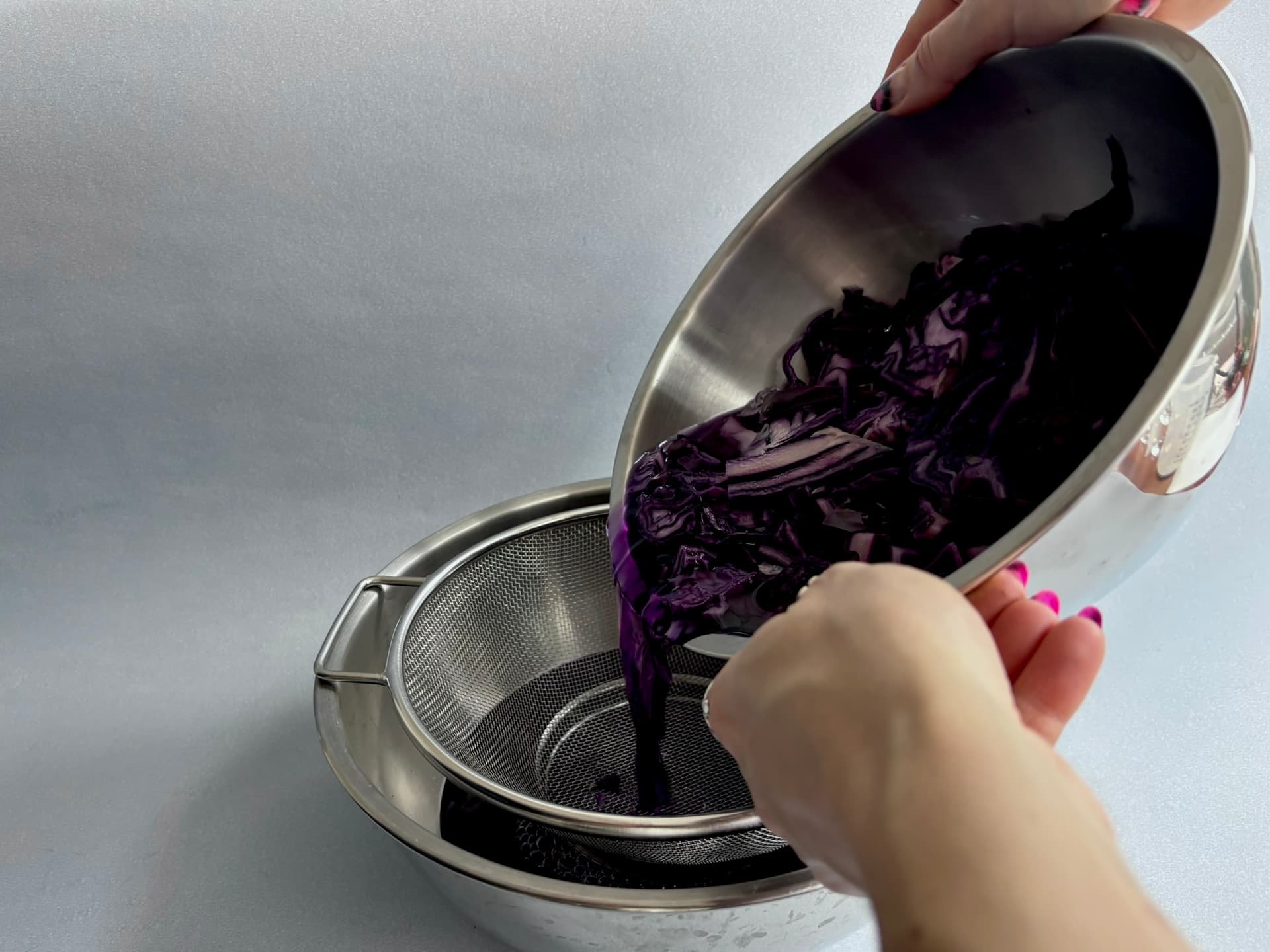
Step 3
Use a strainer to separate the red cabbage from the now-colored water; collect the liquid in a container.
The resulting purple liquid is your pH indicator.
Construct your pH scale
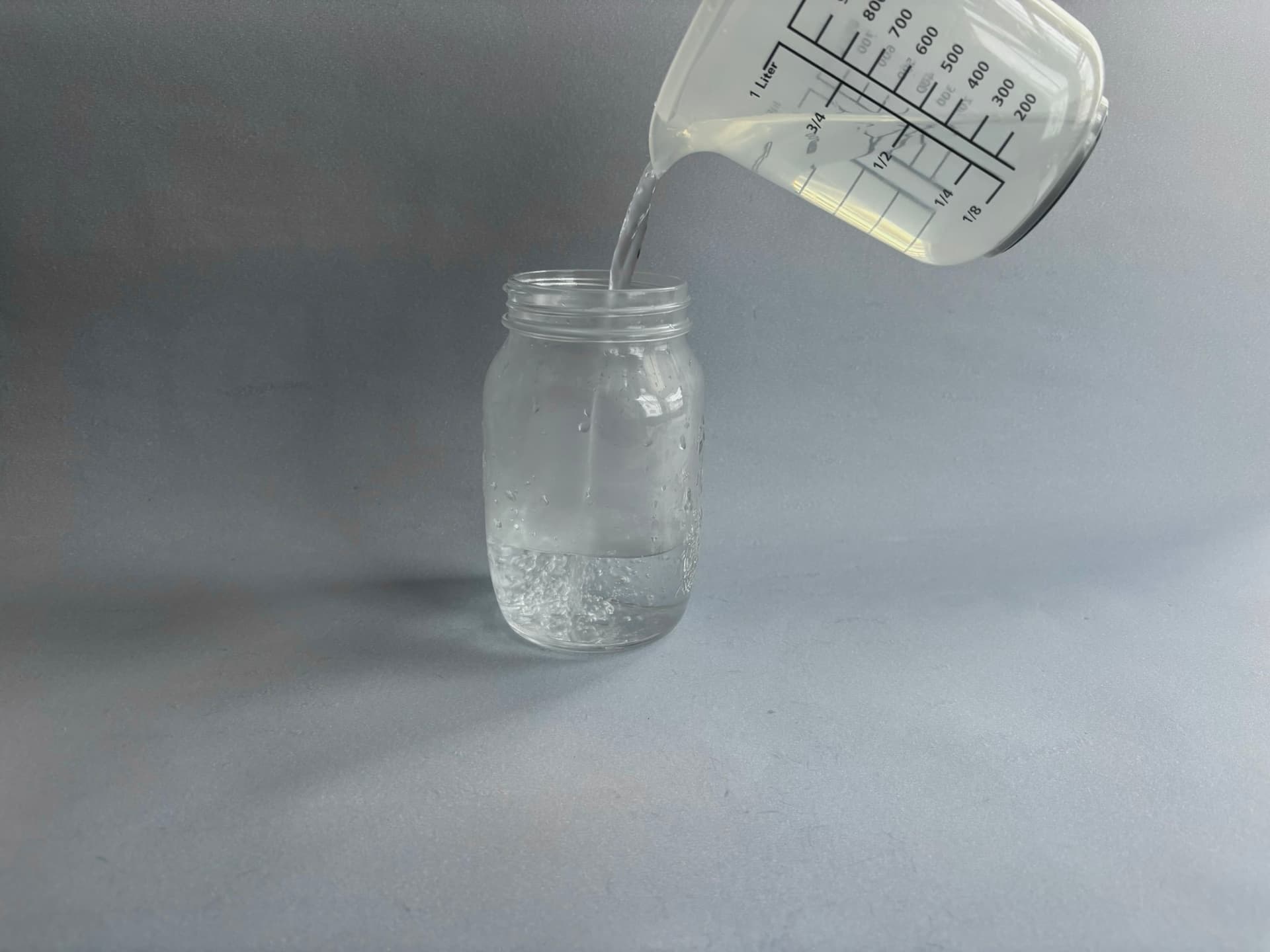
Step 1
Prepare your pH indicator:
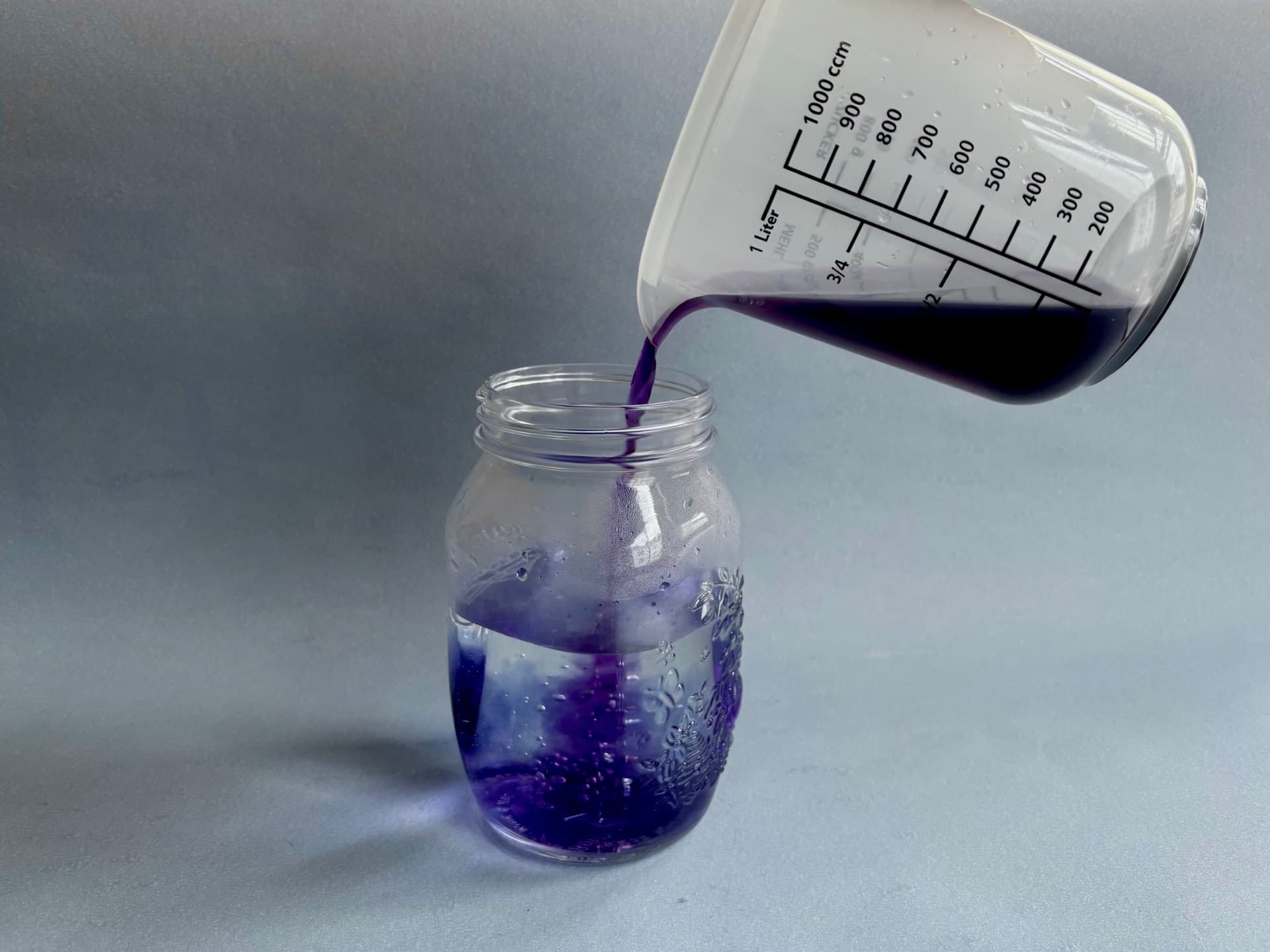
Pour 750 ml of water into a large container.
Step 2
Add 250 ml of your pH indicator.
Step 3
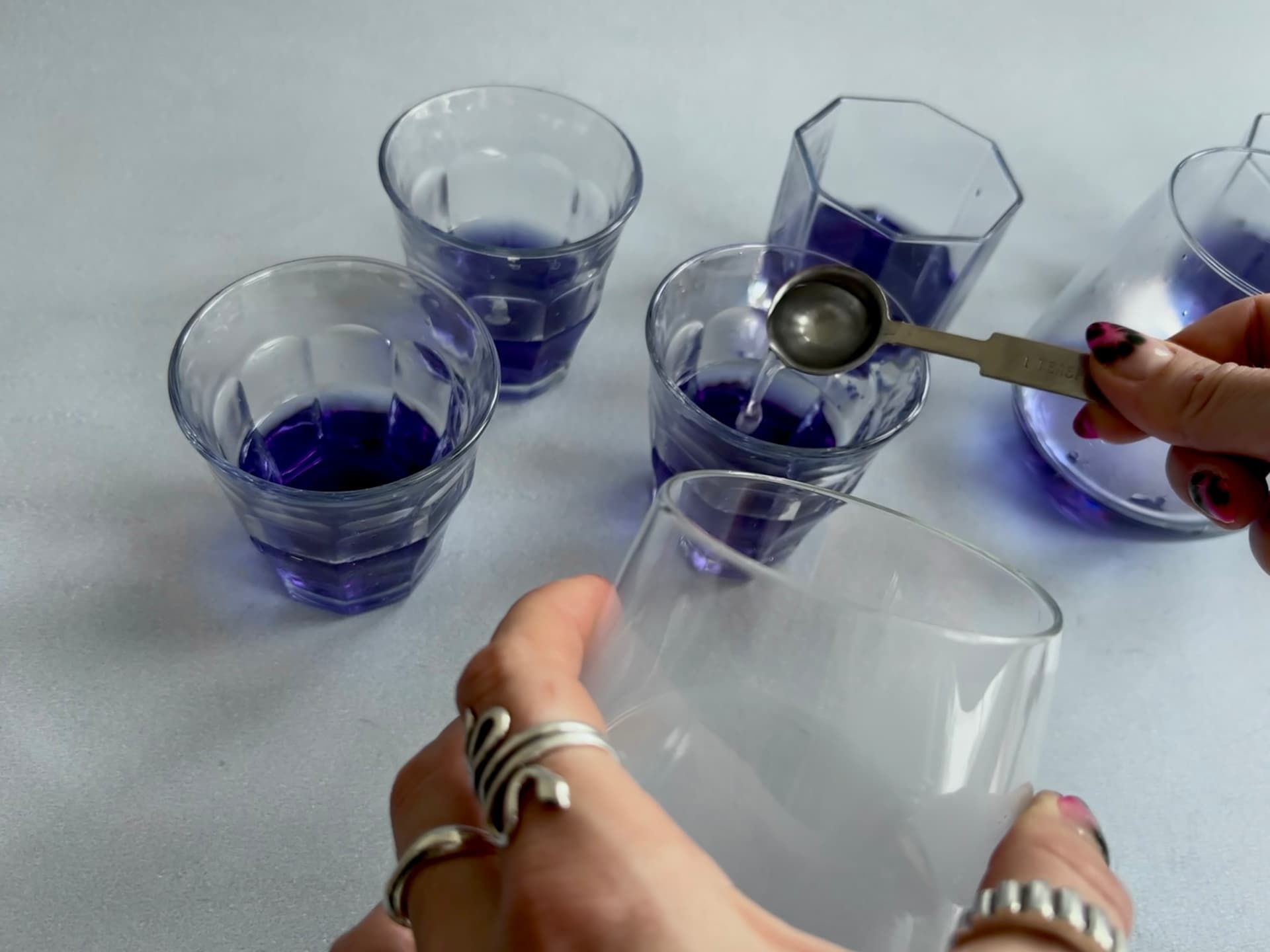
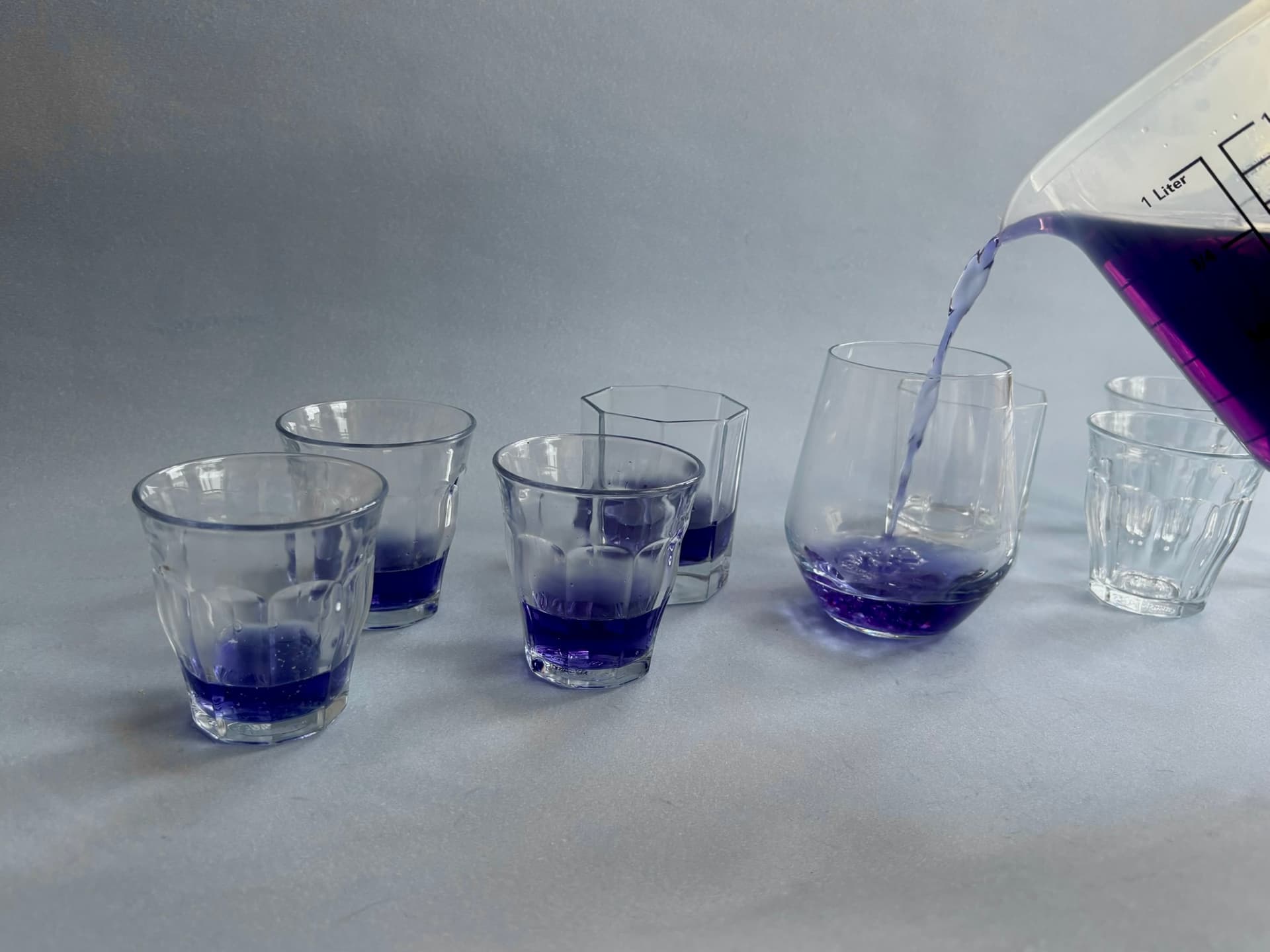
Divide your water/pH indicator mixture among the 9 prepared glasses, adding about 75 ml to each glass.
Step 4
Prepare your test solutions.
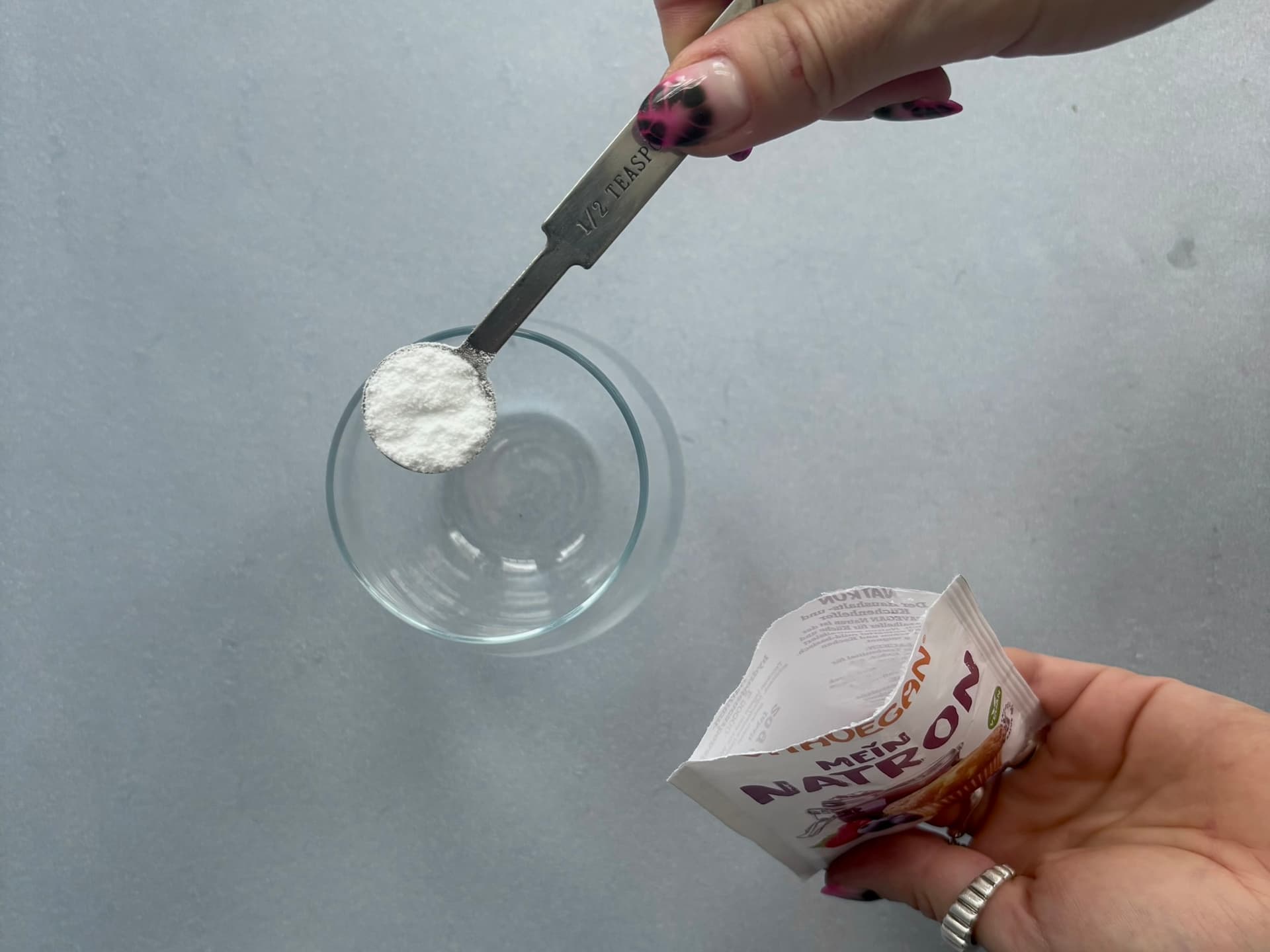
Dissolve the dry reagents in water (half a teaspoon in about 50 ml of water).
Dilute the liquid reagents (one teaspoon in about 25 ml of water).
Try out!
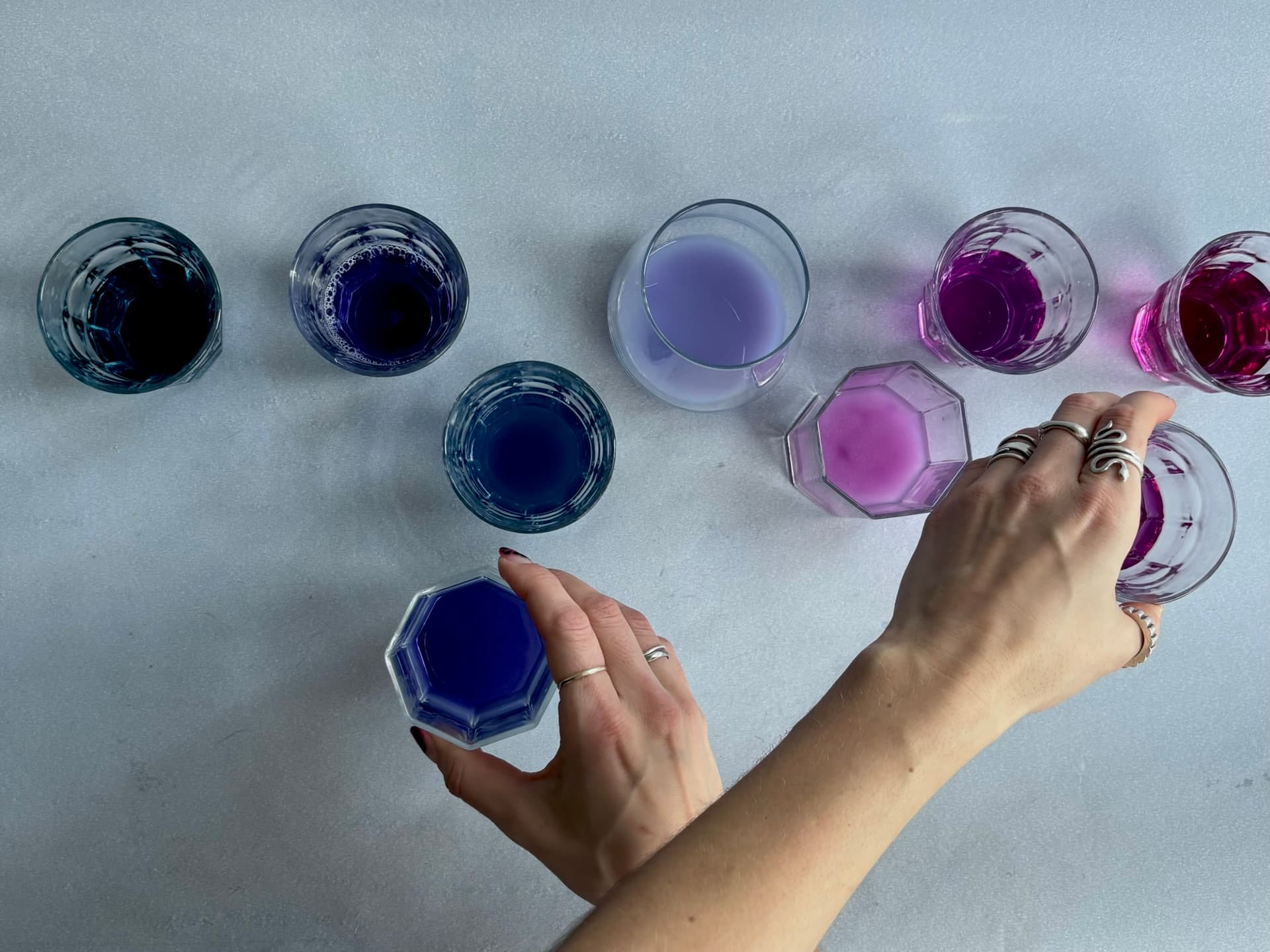
Now you can determine the pH value of various liquids with unknown pH values by comparing their colors to your pH scale
Prepare the liquids or solids to be tested as described in Step 4
In a clean glass, mix one teaspoon of your test liquid with 75 ml of pH indicator
Compare the color to your scale to determine the pH
Note: If the liquid you are testing already has a natural color (e.g., Fanta = orange, balsamic vinegar = dark brown, etc.), this can influence your observation and thus your conclusion.
Keep exploring!
What does the H in pH stand for? Find out what the chemical basis for the pH value is. What does it actually tell us?
How does a pH indicator work? (In our case, the red cabbage water)
Most cells feel most comfortable at a neutral pH (7.4) - why is that?
In which of your test reagents would a cell therefore feel most comfortable?
What options are there for stabilizing the pH of a system? (Hint: buffers)
What factors, besides pH, need to be considered when cultivating cells outside the body (“in vitro”)? What does a cell need to survive?
BONUS Experiment: Acetate Buffer
What do you need?
Vinegar (5% acetic acid)
Baking soda
Water
2 glasses
Your homemade pH indicator
Experiment setup
Glass 1: Water only
Glass 2: 188.6 ml water + 11.4 ml vinegar + 1.6 g baking soda
Add a few drops of indicator to both glasses
Add a quarter teaspoon of vinegar to both glasses
Observe the color difference
Prediction
Glass 1: pH changes significantly
Glass 2 (buffer): pH remains more stable
You have created a buffer system that can “cushion” pH fluctuations. Research exactly how this works.